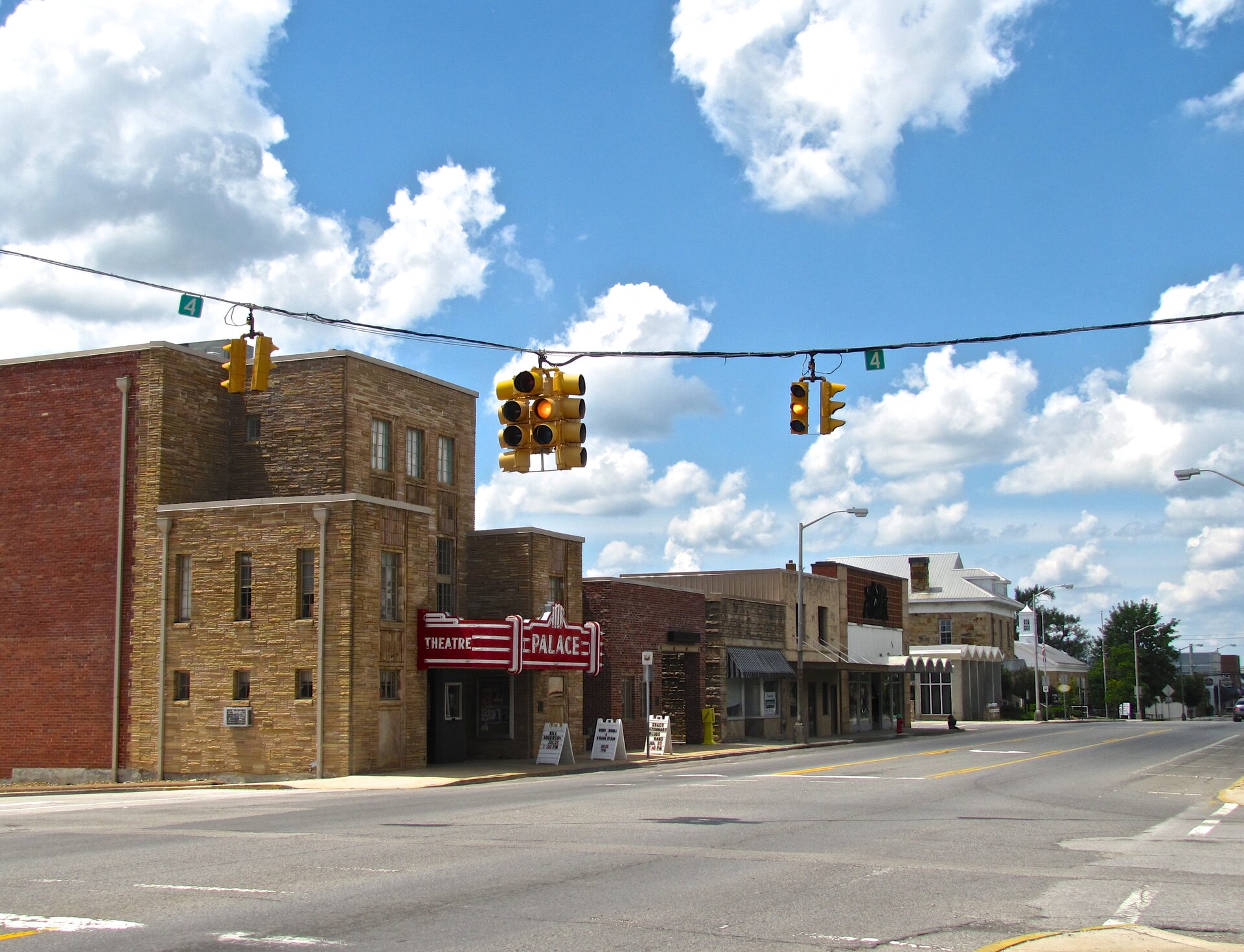
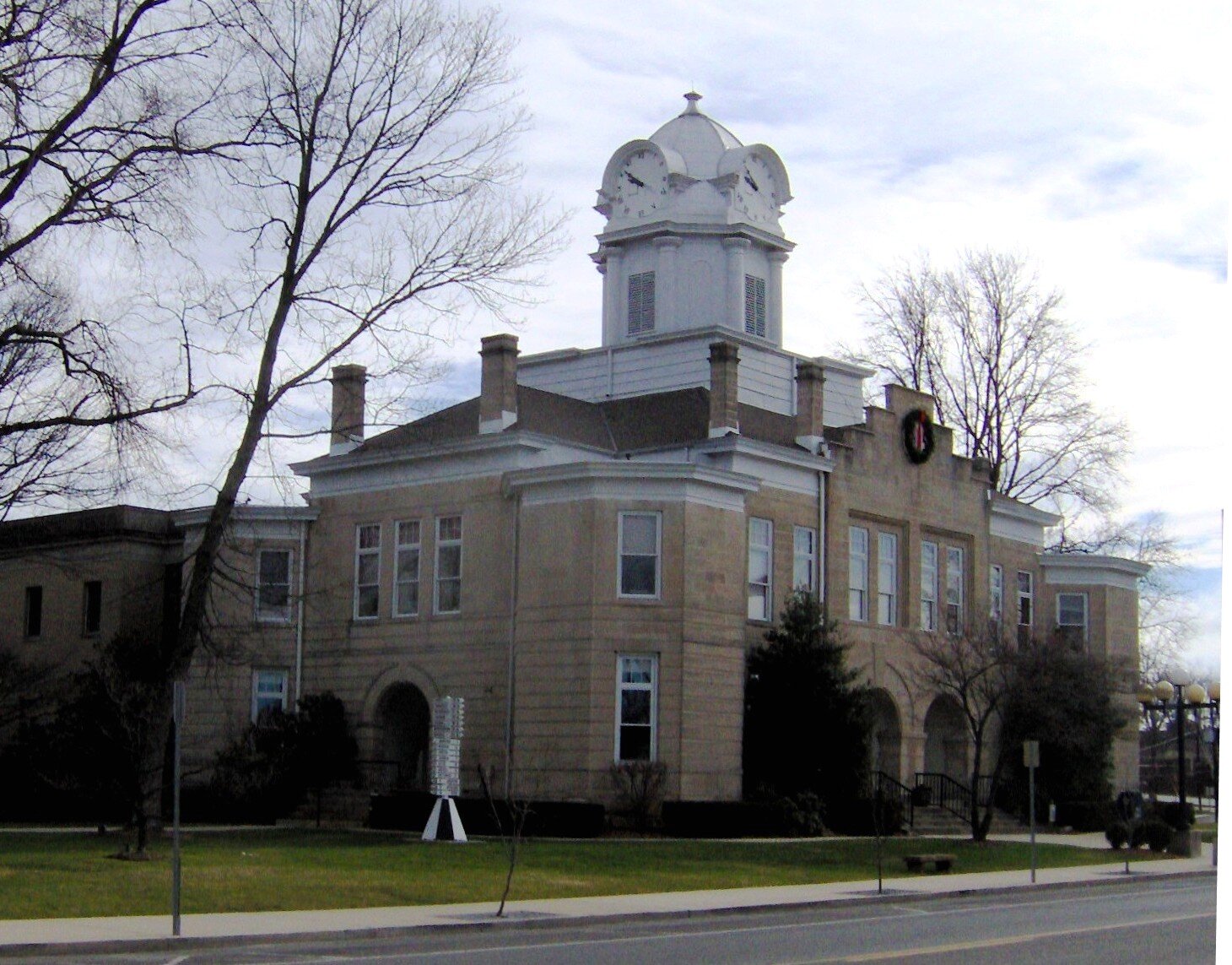
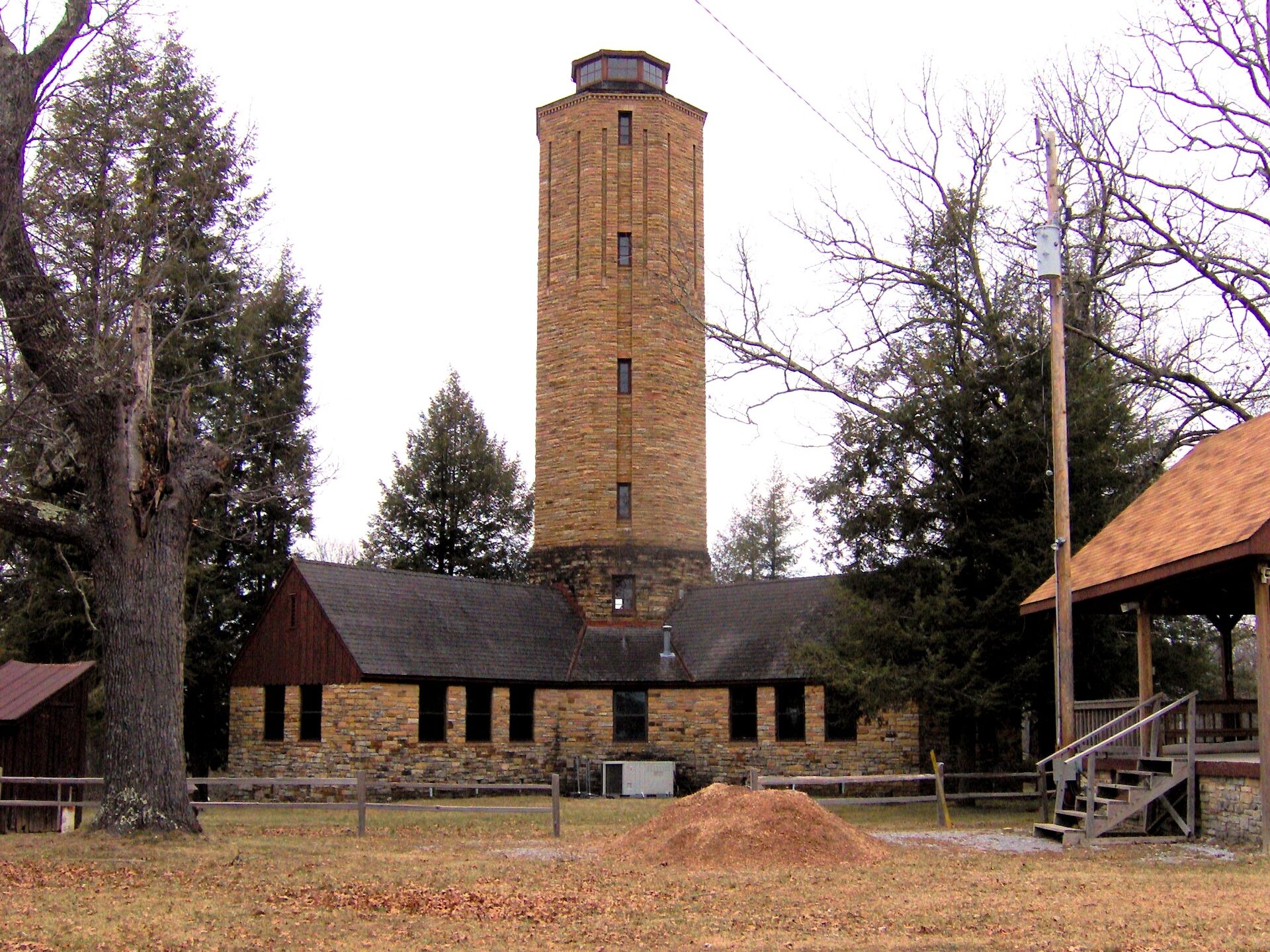
A decorative Flock Safety camera appears in the top-right of the banner, as if watching Crossville landmarks below.
The bigger picture
Why this matters
The question isn't whether Crossville officials today would misuse Flock cameras. The question is whether to build a searchable database of everywhere residents drive — knowing that database will still exist when your kids and grandkids are driving, under leaders who haven't been elected yet, enforced by people you haven't met yet.
"Arguing that you don't care about the right to privacy because you have nothing to hide is no different than saying you don't care about free speech because you have nothing to say."
— Edward Snowden
The phrase has a long history. Upton Sinclair wrote about it in his 1918 book The Profits of Religion after the government opened his mail: "If you have nothing to hide you have nothing to fear," a federal official told him with a "bland smile." The line was used to justify loyalty review boards during the McCarthy era in the 1950s. It appears in dystopian fiction from Orwell's 1984 to V for Vendetta.
The argument sounds reasonable until you think about who decides what counts as "something to hide." Going to church was legal. Protesting was legal. Having foreign relatives is legal. Using a VPN is legal. None of that mattered once the surveillance infrastructure existed and someone in power decided those activities were problems.
Privacy is not about hiding wrongdoing. As Snowden put it: "Privacy is the fountainhead of all other rights. Freedom of speech doesn't have a lot of meaning if you can't have a quiet space to decide what it is you actually want to say."
A related dodge is that license plates are in public, so logging every trip cannot be a search. Courts have not treated that as a blank check. See "No expectation of privacy in public".
Below are documented cases — not hypotheticals — of what happens when governments have the tools to track where people go, who they associate with, and what they do. The question for Crossville is whether to build more of that infrastructure before the next crisis.
A common reply to Flock cameras is that plates sit in public view, so photographing them and storing the trips cannot be a search. U.S. courts do not treat that as a blank check. The Fourth Amendment asks whether surveillance violates a reasonable expectation of privacy. That depends on how much is collected, for how long, and how easily it can be searched later — not on whether the car was on a public road.
"A person does not surrender all Fourth Amendment protection by venturing into the public sphere."
Carpenter was about 127 days of cell-tower location records that tracked a person on public roads. The Court called that "near perfect surveillance," as if the government had attached an ankle monitor. The issue was not one glance at a phone. It was an automated log of movements over time.
Justice Sonia Sotomayor's concurrence in United States v. Jones (2012) drew the same line for GPS tracking of a car. She wrote that it "generates a precise, comprehensive record of a person's public movements that reflects a wealth of detail about her familial, political, professional, religious, and sexual associations." She also noted that automated surveillance "evades the ordinary checks that constrain abusive law enforcement practices: limited police resources and community hostility." Justice Samuel Alito's concurrence in the same case is the usual cite for mosaic theory: many individually ordinary observations, stacked together, can become a search.
The Massachusetts Supreme Judicial Court applied that reasoning to license-plate readers in Commonwealth v. McCarthy (2020):
"With enough cameras in enough locations, the historic location data from an ALPR system in Massachusetts would invade a reasonable expectation of privacy and would constitute a search for constitutional purposes."
One officer noticing a plate is not a citywide, searchable travel history. Crossville is not buying a snapshot. It is leasing into a network that stores time, place, and vehicle image, then lets authorized users search later. That is the difference McCarthy flagged.
City Attorney Randy York told Crossville City Council on August 12, 2026 that a Sixth Circuit decision and Tennessee’s displayed-plate rule mean there is no expectation of privacy in a license tag, and that Crossville’s Flock units are plate readers only. Outlets did not name that Sixth Circuit case. That argument is about one officer seeing a plate in traffic. Carpenter, Jones, and McCarthy are about long-running, searchable location histories. Knox County’s August 31 ban is an ordinance, not a court holding that Flock is unconstitutional. The introduced Flock-Off Act would cut federal money for ALPRs; Massie said it would not ban cameras a city funds itself. Even if it passed, it would not by itself take down Crossville’s locally funded Falcons. Wisconsin agencies dropped Flock after other states’ open-records releases of shared national search logs. This page is not legal advice. Work-session writeup: September 1.
Privacy advocates Lee Schmidt and Crystal Arrington challenged Norfolk, Virginia's 176-camera Flock network. Discovery showed Schmidt's vehicle logged 526 times and Arrington's 849 times between February and July 2025, according to NBC News.
On January 27, 2026, a federal judge granted summary judgment for the city, finding that those cameras did not reconstruct the entirety of a person's movements. The same opinion warned that denser ALPR tracking could still fail the constitutional test later. The plaintiffs, represented by the Institute for Justice, said they would appeal. This is not "Flock lost." It is also not "the Constitution does not apply to public roads." The home page walks through the warrant path versus the Flock path at Fourth Amendment.
A documented roundup of this argument, with the same cases and the neighboring talking-point replies, is on the Consumer Rights Wiki:
The pandemic created emergencies. It also revealed how quickly surveillance tools get deployed against ordinary people doing ordinary things — and how hard they are to challenge once the infrastructure exists.
Across the country, emergency powers were used to arrest, fine, and jail people for activities that would have been unremarkable a month earlier. Liquor stores stayed open as "essential." Thousands gathered for protests that summer with official blessing — public health experts signed open letters saying the cause was worth the risk. But churches were shut down, and the people who went anyway were tracked, fined, and arrested.
The infrastructure existed. The emergency was declared. The enforcement happened. Courts eventually pushed back — but families had already been traumatized, businesses destroyed, and the precedent set.
Kentucky
On Good Friday 2020, Governor Andy Beshear announced that state police and the National Guard would record license plates of anyone attending Easter church services. Quarantine notices were placed on vehicles and mailed to homes, ordering 14-day self-isolation.
Maryville Baptist Church in Hillview held a drive-in service anyway — congregants stayed in their cars and listened over a loudspeaker. State troopers recorded plates and left notices on windshields calling attendance a "criminal act." On-Air-Credit Baptist Church in Louisville found nails scattered in its parking lot Easter morning.
The Sixth Circuit Court of Appeals ruled in the churches' favor, finding Kentucky treated religious gatherings more harshly than comparable secular activities. But the plates had already been collected. The names had already been logged.
Dallas: Shelley Luther reopened her salon, Salon à la Mode, on April 24, 2020, after a cease-and-desist order. She tore up the order on camera. A judge found her in contempt and offered to waive jail time if she apologized and admitted she was wrong and selfish. She refused.
"Feeding my kids is not selfish," Luther told the judge. She was sentenced to seven days in jail and a $7,000 fine. Governor Greg Abbott modified his executive order two days later to eliminate jail as a punishment. The Texas Supreme Court ordered her release and later voided the contempt judgment entirely.
Santa Clara County: County officials hired SafeGraph, a data broker, to draw "geofences" around Calvary Chapel San Jose's parking lots, sanctuary, and other facilities. Between August 2020 and January 2021, officials made 44 surveillance visits. A Stanford professor analyzed the cell phone location data to estimate attendance — including phones detected in the prayer room and bathrooms.
The county sought nearly $3 million in fines; a judge ordered $1.2 million. The church is now suing, alleging the county "embarked on a year-long surveillance operation" that tracked "unaware individuals by gathering their sensitive cell phone location data." The county says the data was "anonymized," but researchers have shown 95% of individuals in phone location datasets can be uniquely identified.
Malibu: On April 2, 2020, lifeguards on a boat ordered a lone paddleboarder out of the ocean. When he refused, Malibu sheriff's deputies arrested him on the beach. He was the only person in the water. The arrest was for "disobeying the Safer at Home order."
On April 5, 2020, Matt Mooney was playing catch with his 6-year-old daughter at an open field in Brighton, a Denver suburb. Three police officers approached. The park was nearly empty. When Mooney declined to leave, an officer handcuffed him in front of his daughter and placed him in a patrol car. He was cited for violating a "social distancing" order.
The Brighton Police Department later apologized, calling it "overreach." The citation was dismissed.
On March 30, 2020, Pastor Rodney Howard-Browne of The River at Tampa Bay Church was arrested after holding two Sunday services with hundreds of attendees. The Hillsborough County Sheriff called it "reckless disregard for human life." Howard-Browne turned himself in and was charged with unlawful assembly and violating public health rules.
Prosecutors dropped all charges in May, citing "changed circumstances" — Florida had begun reopening.
On April 21, 2020, Sara Brady was arrested at a playground in Meridian, Idaho, after organizing a "playdate protest" against park closures. When police told her to leave, she replied, "arrest me." They did. She was charged with misdemeanor trespassing.
The case dragged on for three years. In 2023, Idaho Attorney General Raúl Labrador moved to dismiss all charges, calling the prosecution "government overreach" that "should never have been prosecuted in the first place."
Pastor Tony Spell of Life Tabernacle Church in Central, Louisiana, continued holding services with hundreds — sometimes over 1,000 — attendees after the governor's stay-at-home order. He was charged six times with violating the order. Spell called the charges "religious persecution."
He was also charged with assault after backing a church bus toward a protester. Spell argued churches were essential and the order violated religious liberty. Most charges were eventually dropped or dismissed.
Karl Manke, a 77-year-old barber in Owosso, reopened his shop on May 4, 2020, in defiance of Governor Gretchen Whitmer's shutdown order. The state suspended his license. Police cited him twice for violating the order. The attorney general filed for a restraining order.
Manke kept cutting hair. Customers lined up outside. In October 2020, after the Michigan Supreme Court ruled Whitmer's orders unconstitutional, prosecutors dropped all charges against him.
Ian Smith and Frank Trumbetti reopened Atilis Gym in Bellmawr on May 18, 2020. When police arrived, crowds cheered the owners. The Bellmawr police chief reportedly told them to "have a good day." The gym stayed open.
Governor Phil Murphy was not amused. Days later, at 5:45 a.m., the Camden County Sheriff's Office arrived with over a dozen vehicles, K-9 units, and officers from multiple agencies. Smith and Trumbetti were arrested. The gym's locks were changed. The owners racked up over $1.2 million in fines and faced contempt charges. A judge later reduced the fines significantly.
Staten Island: In November 2020, Mac's Public House declared itself an "autonomous zone" and continued serving customers indoors despite shutdown orders. Owner Danny Presti was arrested twice — once after allegedly hitting a deputy with his car while fleeing (he said he was in fear for his life). The bar's liquor license was revoked.
In December 2021, a judge dismissed all 10 summonses against the bar's manager, Keith McAlarney, finding the enforcement had "a distinct political overtone" and that McAlarney was "selectively prosecuted." The judge noted other establishments in the area had not been targeted the same way.
Australia's Northern Territory converted a former mining camp called Howard Springs into a mandatory quarantine facility. Over two years, it held 64,000 people — including citizens transferred there against their will.
When COVID reached the remote Aboriginal communities of Binjari and Rockhole in November 2021, authorities imposed a "hard lockdown" — residents could not leave their homes even for exercise. The Australian Defence Force was deployed with trucks and personnel to enforce compliance at checkpoints and transfer residents to Howard Springs.
Teenagers who escaped the facility by scaling a fence were tracked down by police and arrested. They faced fines of over $5,000 for "breaching Chief Health Officer's directions." A coroner is now investigating whether the mandatory detention was even legal.
Meanwhile, New South Wales, Victoria, and South Australia trialed facial recognition apps for home quarantine. The apps pinged users at random intervals, requiring them to submit a selfie and GPS location within 5–15 minutes. Failure to respond triggered a police visit. International press described the system as "Orwellian." Police in multiple states also accessed COVID check-in app data for purposes unrelated to contact tracing — at least six documented times.
Pastors arrested, ordered to preach science: Calgary pastor Artur Pawlowski was arrested multiple times for holding church services. He was fined $23,000, given 18 months probation, and ordered by a judge to present "the other side" of COVID science whenever he publicly criticized health measures — compelled speech as a condition of staying out of jail. When he returned from a US speaking tour, police arrested him at the Calgary airport. The judge refused jail time explicitly because "21 days in jail would make him a martyr."
Freedom Convoy bank freezes: In February 2022, Canadian truckers drove to Ottawa to protest vaccine mandates. The "Freedom Convoy" occupied streets around Parliament Hill for three weeks. Prime Minister Justin Trudeau invoked the Emergencies Act — the first time it had ever been used.
Under emergency powers, the government directed banks to freeze accounts of anyone "associated with" the protests — without court orders. The RCMP provided financial institutions with lists of names and license plate numbers gathered from the protest site. Banks froze 257 accounts. Police shared 253 Bitcoin wallet addresses with cryptocurrency exchanges.
According to testimony before Parliament, the RCMP's lists included personal details from police databases: whether protesters had been suspected of other crimes, had witnessed crimes, or had other "dealings" with police — plus personal information like age and height. Officers called most targeted protesters to warn them their accounts would be frozen if they didn't leave. Many didn't leave. Their accounts were frozen anyway.
The freeze was lifted after about a week. But courts later ruled the government's use of the Emergencies Act was unreasonable and violated Charter rights. The infrastructure had worked exactly as designed: identify people at a protest using license plates and other data, then cut off their access to money. The fact that it was later ruled unconstitutional didn't undo the financial disruption to hundreds of families.
These aren't hypotheticals about what surveillance could become. They're documented systems already in use — tracking plates, faces, phones, and social media to identify, detain, and punish people the government decides are problems.
Britain has one of the densest surveillance networks in the democratic world. The National ANPR Service logs over 50 million license plate reads per day — retained for years — letting police reconstruct anyone's travel history without a warrant. London alone has an estimated 700,000+ CCTV cameras.
The question isn't whether the tools work. It's who they get used against. In 2024, after riots broke out in multiple cities, courts handed down sentences of up to three years for social media posts. Facial recognition and phone data helped identify participants within days. The infrastructure worked exactly as designed.
That infrastructure existed for decades — yet it wasn't mobilized to stop the grooming gang networks operating in Rotherham, Rochdale, Telford, and other towns. The Jay Report found at least 1,400 children were sexually exploited in Rotherham alone over 16 years — while authorities had reports, had tools, and did not act.
The surveillance infrastructure doesn't guarantee safety. It guarantees that whoever controls it decides who gets watched.
During the 2019–2020 protests, Hong Kong demonstrators showed what it looks like when people assume surveillance infrastructure will be used against them. They covered their faces, paid cash, avoided the Octopus transit card, used burner phones, and communicated through encrypted apps that auto-delete messages.
They did this because they understood that every camera, every card reader, every cell tower creates a record — and that record would be used to identify, arrest, and prosecute them. Many were right. The National Security Law passed in 2020 has been used to arrest over 260 people, with some sentenced to years in prison for organizing or attending protests.
When protests erupted after Mahsa Amini's death in 2022, Iran shut down the internet — then used the surveillance infrastructure to find protesters after the fact. Facial recognition matched faces from protest footage to ID databases. Women who removed their hijabs in public were identified and summoned weeks later.
Authorities announced they would use facial recognition on public transit to enforce hijab laws. The tools built for "public safety" became tools for enforcing religious dress codes — with no vote, no debate, and no way for citizens to opt out.
Moscow's facial recognition system — one of the largest in the world — was deployed against anti-war protesters after the 2022 invasion of Ukraine. Police used cameras in the metro and on streets to identify people who attended protests, then detained them at home or at work days later.
Some were arrested before they even reached the protest site — identified by cameras as they traveled. OVD-Info, a human rights monitoring group, documented cases of protesters detained solely based on facial recognition matches, with no other evidence.
If you want to see where unchecked surveillance infrastructure leads, look at Xinjiang.
The Chinese government's Integrated Joint Operations Platform (IJOP) aggregates data from CCTV cameras, license plate readers, WiFi sniffers, phone trackers, ID card scanners, and even electricity meters. It tracks the "trajectory" of phones, vehicles, and people. It flags "micro-clues" — using too much electricity, having foreign contacts, downloading WhatsApp, or praying too often.
Human Rights Watch reverse-engineered the mobile app that police use to interface with IJOP. They found the system flags people for behaviors including: traveling abroad, using a phone not registered to them, "ichklich" (leaving through a back door), and being related to someone who got a new phone number. When IJOP flags someone, an alert goes to the nearest officer, who investigates and decides whether to detain.
The platform screens all 23 million residents of Xinjiang with facial recognition and license plate cameras. A program called "Backflow Prevention" flags anyone who traveled abroad for "immediate arrest." According to leaked police files analyzed by researchers, Hikvision cameras trigger automated alerts when "high-risk" vehicles appear.
An estimated one million Uyghurs and other Turkic Muslims have been detained in what the government calls "vocational training centers." People have been sent there for having foreign relatives, for praying, for not drinking alcohol, for having a beard. The surveillance infrastructure doesn't just catch criminals. It defines who counts as a criminal.
The ACLU found that Flock's template contract — signed by police departments across the country — contains this language:
The customer "hereby grants Flock" a "non-exclusive, worldwide, perpetual, royalty-free right and license" to "disclose the Agency Data… for investigative purposes."
Even if a department clicks "don't share my data" in Flock's system settings, this contract clause may override that choice. The ACLU of Massachusetts found it in contracts across 80+ police departments. Boston PD is the only major department known to have negotiated the clause out of their agreement.
Raw plate data and footage: Contractually limited to law enforcement "for investigative purposes only."
"Aggregated Data": Flock gets a perpetual, irrevocable license to use it for "crime prevention efforts, other Flock offerings, and marketing."
The catch: Flock defines what "aggregated" means. Their contract says it's data where personal information has been "permanently anonymized by commercially available standards" — but Flock decides when that standard is met. "Crime prevention efforts" and "other Flock offerings" are vague enough to include partnerships with private security firms, analytics companies, or products sold to HOAs and businesses.
Flock's contracts explicitly list "schools, neighborhood homeowners associations, businesses, and individual users" as "Non-Agency End Users" who can share footage into the same cloud that police search. The bigger issue isn't whether Flock will sell your data to private companies — it's that private companies are already feeding data into the system your police department queries.
When Crossville PD searches Flock, they're searching a database that includes cameras from retailers, HOAs, and private security across the network. When those private entities search, they can see alerts from police hotlists. It's one system with public and private nodes.
Flock's marketing says their cameras "do not use facial recognition" and "do not identify race, gender, or ethnicity." But U.S. Patent US11416545B1 — assigned to Flock Group Inc., granted August 2022 — describes something very different:
People classification by demographics: The patent filing describes AI systems that sort people into groups including "male, female, race, etc.," plus clothing types and estimated height/weight.
Face recognition data points: One scenario describes getting "face recognition data points" from one camera and searching other cameras for matches — tracking the same person across the network.
Object "fingerprinting": The system creates unique identifiers for every detected object — not just plates, but Hough lines, pixel ratios, hash values, and "neighborhood data" (spatial maps of surrounding objects) — allowing cross-camera tracking even when a plate isn't visible.
"Dynamic geographic footprint": The patent describes a system not limited to fixed cameras — it can aggregate footage from traffic cameras, neighborhood watch systems, convenience stores, drones, and "pedestrian smartphones."
A patent doesn't prove Crossville's cameras are doing all of this today. But it shows what Flock told the Patent Office it can build — capabilities that go far beyond "just license plates." Cities should demand in writing exactly which features are enabled and which are contractually prohibited. See the full breakdown: Patent vs marketing.
You don't have to think Crossville is about to become Xinjiang to see the pattern. Infrastructure built for one purpose gets used for another. License plate readers sold as crime-fighting tools get used to look up people officers already know. The claim that plates in public have no privacy left is the subject of Supreme Court and ALPR case law. Cell phone data collected for "public health" gets used to prosecute churches. Emergency powers invoked against protests get ruled unconstitutional — after the damage is done.
In August 2026, 404 Media obtained government intelligence bulletins showing that local, state, and federal law enforcement are actively monitoring anti-Flock social media accounts — tracking specific Instagram posts, TikTok videos, and upcoming civic events like the DeFlock "National Week of Action."
That Week of Action consists of public meetings, town halls, and conversations with city councils — and the fusion center documents warn police to "increase patrols around ALPR" in response.
DeFlock — a crowdsourced map showing where surveillance cameras are located — has helped cancel over 100 Flock contracts through legitimate civic engagement. Its founder says they've never called for vandalism. But the government bulletins lump political opposition together with vandals and even mention neo-Nazi groups in the same documents — despite noting those groups "lost traction" and there's "no indication" they actually targeted any cameras.
The surveillance infrastructure is now surveilling people who question the surveillance infrastructure.
The question isn't whether Crossville officials today would misuse Flock cameras. The question is whether to build a searchable database of everywhere residents drive — knowing that database will still exist when your kids and grandkids are driving, under leaders who haven't been elected yet, enforced by people you haven't met yet.
Every case in this site's misuse database started with someone saying the cameras were just for catching criminals. Every city in the cancellation database eventually decided the risk wasn't worth it. The only way to guarantee a surveillance tool won't be misused is to not build it in the first place.
 Crossville