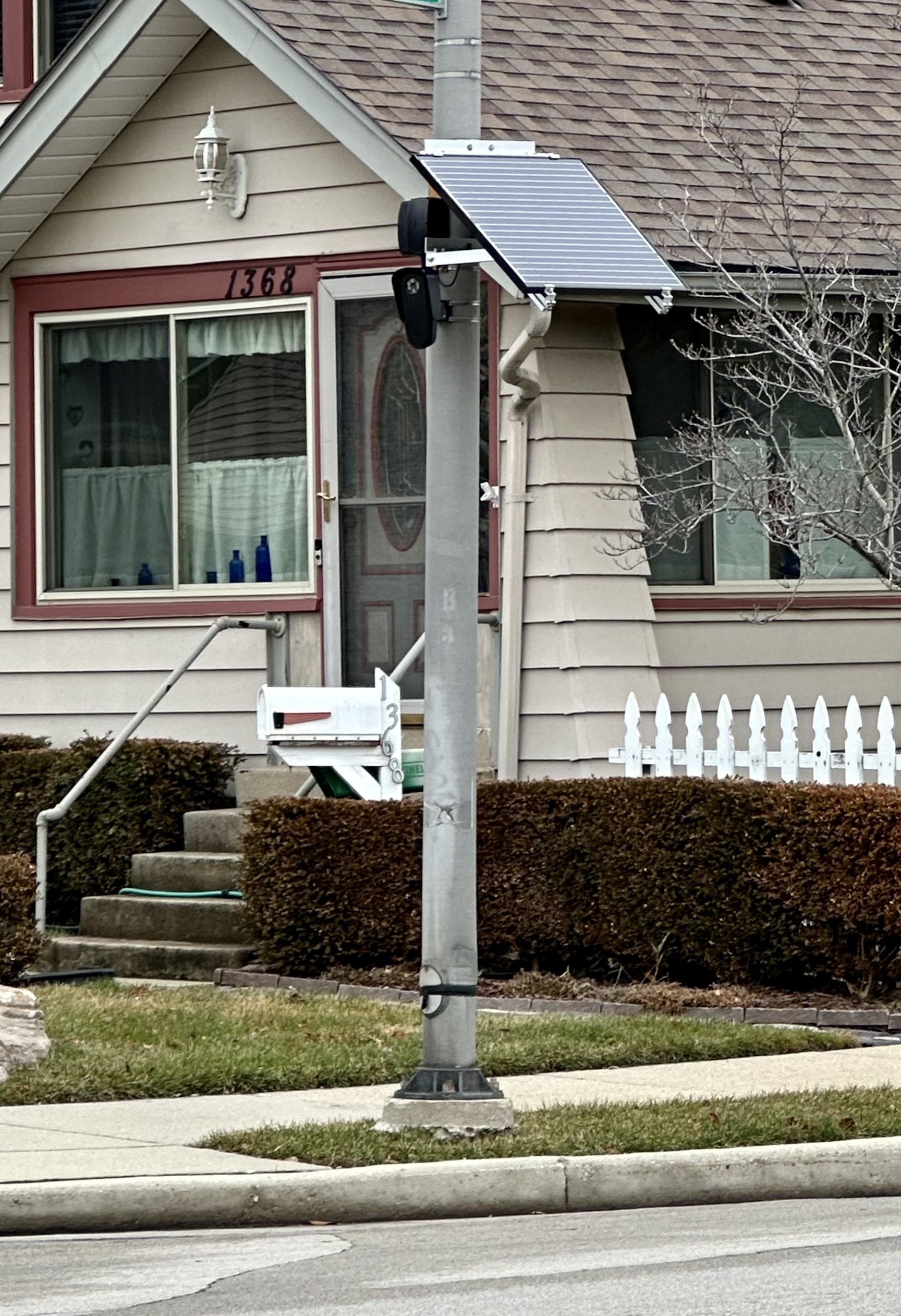
b — Company swaps & Axon
This is not just about Flock
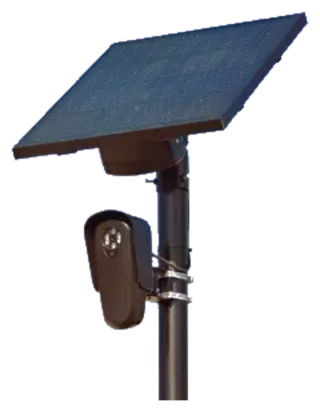
Canceling a Flock contract can help. It does not automatically end mass license-plate surveillance. What keeps happening: cities cancel Flock, then hire Axon (or shop Motorola Vigilant, Rekor, Genetec, Leonardo ELSAG, and others) to put plate readers on the same poles. The sales pitch changes. The job stays the same — scan every car, store the data, search it later. Some vendors go further: Leonardo pitches sensors that correlate plates with phone and Bluetooth IDs.
Cities that canceled Flock, then hired Axon
| Place |
What changed |
Source |
| Denver, CO |
Flock contract ended; City Council narrowly approved Axon — 50 cameras, $150k / 1 year. Officials said the new deal had tighter privacy rules |
Denver7 ·
Denverite
|
| Douglas County, CO |
About $22.8M Axon deal: 100 Outpost plate readers (replacing 50 Flock cameras) plus countywide drones. Officials said “we own the data” |
Denver Gazette
|
| Grand Chute, WI |
Board canceled Flock and signed Axon the same night; 23 cameras stay, swap by Sept. 1 |
FOX 11 / WLUK
|
| Tempe, AZ |
60-day free Axon Outpost trial after other Arizona cities canceled Flock |
ABC15
|
| Syracuse, NY |
City Flock readers removed mid-July 2026; multi-year Axon plate-reader contract already approved — vendor swap, not an end to scanning |
National cases spotlight ·
Spectrum News 1
|
| Knoxville, TN (nearby) |
After Flock ended, the city pushed a large Axon deal with a real-time crime center and drones — same kind of surveillance, different company. Axon also runs a vendor-styled “Connect Knoxville” private-camera program (see below) |
WVLT ·
Compass Knox ·
Connect Knoxville ·
Politician positions
|
Knoxville already went through this. Crossville should not look for a “better” plate-reader company. Take the cameras down. If police need location data on a specific car in a specific case, they should get a warrant — not scan every driver every day.
Axon and Flock were partners — not always rivals
Most people treat Axon and Flock as separate vendors. They compete for contracts now. For years they were tightly linked:
- April 2020: Axon announced a commercial partnership and a minority, non-controlling investment in Flock Safety; Axon’s sales team would help sell Flock cameras to police
(Axon investor release).
- June 2021: Axon Fleet 3 in-car cameras launched with two-way Flock integration. Mobile ALPR reads from Fleet 3 appeared alongside fixed Flock cameras inside Flock’s Lookup Experience — one search covering both systems.
- ~2023: The partnership dissolved after Axon launched its own competing ALPR line. Flock’s public blog confirmed that Flock processed Fleet 3 footage, applied Vehicle Fingerprint technology, and made it searchable inside Flock
((Flock blog).
Switching company names does not erase that shared-platform history. Crossville should ask in writing what Axon products (if any) the city or county already uses, whether any past or present sharing with Flock Lookup was enabled, what data was retained, and under what policy.
Nearby warning: “Connect Knoxville” and fususCORE
In 2026, connectknoxvilletn.org began promoting a program asking Knoxville residents and businesses to connect private security cameras to Knoxville Police. The civic-sounding .org site’s footer reads “Powered by Axon” / “©2026 Axon Enterprise, Inc.,” with contact at connect@fusus.com. The shop sells Axon fususCORE hardware that plugs into an owner’s camera system and can give police live access under owner-set settings, feeding FususONE / KPD’s Real Time Information Center.
The site presents itself as a community program while identifying Axon in its footer and offering Axon hardware for sale: residents pay for gear that can extend the police camera network onto private property. Registry data on the site is described as non-public. AI-enabled CORE devices are marketed with preloaded search/alert profiles (the FAQ says no facial recognition, but may recognize weapons, vehicles of interest, etc.).
Why Crossville should care: Connect Knoxville is the template. If a “Connect Crossville” or county lookalike appears, demand open-meeting approval, published retention/access rules, and enforceable standards before the first device is sold — not after. Deeper East Tennessee writeup:
MaryvillePrivacy.org — Who is Axon?
· EFF on private cameras in real-time crime centers:
EFF (May 2023).
Sources:
Connect Knoxville ·
Camera integration / fususCORE ·
Privacy FAQs ·
Shop
Axon + Ring: doorbell footage into Evidence.com
In 2025, Axon and Amazon’s Ring announced a partnership letting agencies request Ring doorbell footage — routed through Axon’s evidence system
(Axon blog).
Participation is framed as optional, but footage that leaves a home for a vendor cloud can be stored and shared under police/vendor rules. Amazon’s Ring canceled a separate planned partnership with Flock Safety in February 2026 after backlash; the Axon–Ring pathway remains relevant wherever agencies run Axon Evidence next door (including Knoxville’s stack).
Axon corporate record residents can evaluate (attributed reporting)
Public reporting and court documents — not Crossville findings — that inform how residents should weigh Axon’s “responsible innovation” pitch:
- AI Ethics Board resignation (2022): Nine of twelve members resigned after Axon announced Taser-equipped drones for schools, bypassing a board that had voted against proceeding. Resigning members said they had “lost faith in Axon’s ability to be a responsible partner”
(Policing Project statement).
The Markup
later reported that former board materials were removed from Axon’s site and that Axon acquired drone firm Dedrone.
- FTC VieVu antitrust: The FTC challenged Axon’s acquisition of body-camera rival VieVu as anticompetitive; Axon litigated FTC process authority. Municipal plaintiffs later sued alleging monopoly pricing; a federal judge allowed damages claims to proceed (see
Cohen Milstein case page).
- “Excited delirium” litigation strategy:
Physicians for Human Rights
and Reuters investigative reporting describe how the contested diagnosis appeared in hundreds of deaths after Taser use and how Axon (then Taser International) funded research and expert testimony used in related litigation. Major medical groups do not recognize it as a valid cause of death. This site does not make medical findings; the reporting is relevant to vendor trust.
East Tennessee deep dive with full source list:
MaryvillePrivacy.org — Who is Axon?
Axon is a platform, not one camera
Each product layer can feed the same cloud. Agencies that start with Tasers and body cams often add in-car video, Evidence.com, Fusus real-time ops, fixed ALPR (Outpost / Lightpost), drones, AI Draft One, Ring requests, and resident fususCORE devices. The privacy risk is aggregation: searchable location history plus private feeds plus AI analytics without strict written limits.
- TASER / conducted energy weapons
- Body-worn cameras → Evidence.com
- Fleet 3 in-car video + mobile ALPR (historically searchable inside Flock Lookup)
- Fusus / RTCC real-time operating picture
- Outpost / Lightpost fixed ALPR (sold as Flock replacement)
- Axon Air / Dedrone aerial and counter-drone tools
- Draft One AI report writing
- Ring request pipeline + fususCORE private-camera hardware
Problems with Axon too
Some cities hire Axon after dumping Flock because Axon says it is safer or more private. That sales pitch does not stop abuse. Axon products raise separate transparency, conflict-of-interest, and false-alert concerns documented below. None of this is a reason to bring Axon — or any plate-reader company — to Crossville.
Axon · Draft One · AI police reports · 2024–2025
Draft One: AI writes the police report, then deletes the draft
Axon’s Draft One uses body-cam audio to write a draft police report.
EFF
and
Ars Technica
reported that the original AI draft is not kept, so it is hard to compare versions or prove what the AI wrote. Agencies can also turn off a check meant to make sure officers actually read the draft —
also covered by
Mother Jones
and the
ACLU’s Automated Police Reports brief (PDF).
Generative-AI tools can produce inaccurate content. If the draft is gone, courts and defense lawyers have a harder time seeing what the machine said versus what the officer signed.
Sources:
EFF — argues Draft One frustrates transparency ·
Ars Technica ·
Mother Jones ·
ACLU — Automated Police Reports
Axon Fusus · Atlanta ethics · conflict of interest
Atlanta ethics finding: police official owned a Fusus stake while working city business without required disclosure
The
Atlanta Ethics Office
found APD Chief Administrative Officer Marshall Freeman consulted for Fusus, owned a stake in the company, and worked on Fusus city business without proper disclosure — including pitching it to other agencies
(Atlanta Press Collective;
The Guardian).
Axon later bought Fusus for about $240 million.
The Intercept
reported he pitched at least 14 cities; at least nine later signed or expanded Axon Fusus contracts. The Ethics Office fined him $5,000.
Sources:
The Intercept — “Duped” ·
The Guardian ·
Atlanta Press Collective ·
Atlanta Ethics Office decision (PDF)
Axon Fleet 3 plate reader · false alerts
Axon’s help pages describe false alerts and outdated stolen-car lists
The
Fleet 3 ALPR FAQ
tells officers how to mark alerts as Incorrect or Wrong State/Province.
Axon’s
snooze guidance
describes procedures for handling incorrect and wrong-state alerts: older software often cannot tell which state a plate is from (so the same characters from another state can trigger a false alert), can sometimes “read” things that are not plates, and depends on stolen-car lists that can be out of date. Axon’s
early 2026 firmware notes
describe improved state detection aimed at reducing Wrong State hits. False or outdated alerts are how innocent people get stopped at gunpoint when officers do not check the plate themselves.
Sources:
Axon Fleet 3 ALPR FAQ ·
Axon — Snooze / false-alert guidance ·
Axon Jan 2026 release notes — state recognition
Multiple plate-reader companies · LAPD Inspector General · 2026
LAPD: about 1 in 3 stolen-car alerts were wrong. Axon cameras were part of the system
LAPD’s Inspector General looked at two months of alerts. Officers treated 161 alerts as real stolen-vehicle hits that turned out wrong — often because the stolen-car list was outdated — then ran high-risk stops with guns drawn
(TechTimes;
Biometric Update).
Reporting on the audit says LAPD’s plate-reader system included Flock, Motorola, and Axon. LAPD later let the Flock contract expire. Changing companies does not fix bad stolen-car lists, skipped checks, or scanning every car. Taking the cameras down does.
Sources:
TechTimes / OIG coverage ·
Biometric Update
Axon can be abused the same way Flock is
Documented Flock and ALPR problems — personal lookups with no case, misread plates, outdated stolen-car lists — are not unique to one company. They happen when police get a searchable log of where cars go, alerts that feel like “stop that car now,” and little day-to-day supervision. Axon’s in-car readers, pole cameras, Evidence storage, and Fusus real-time tools can do the same things — and can pull in body cams, private-camera feeds, and AI report writing too. That is why Crossville should not switch companies, and why Crossville should take these cameras down completely and stay away from the same kind of technology under any other name.
Same problems with Flock or Axon
- Personal stalking: An officer looks up an ex’s plate or travel history — the
Institute for Justice
has documented dozens of these cases; which company sold the cameras does not matter much
- Searches with no real case: Looking up yourself, family, or coworkers for no official reason —
AJC / GBI reporting (2026)
describes Georgia agencies finding misuse when they actually checked the logs
- False or outdated stolen-car alerts: A misread plate or a car no longer stolen still triggers a stop if nobody checks
- Wrong-state or similar-looking plates: Axon’s own docs describe Wrong State hits; Flock misreads are widely reported — both put innocent drivers at risk
- Sharing with outsiders: Local data can still leave the agency through partners and APIs unless the cameras are gone
- Logs that do not stop abuse: Search logs exist; misuse is usually found by victims or rare audits — not by company marketing
Axon adds more problems, not more privacy
- More cameras, more places: Readers in patrol cars plus pole/streetlight cameras mean more of your trips get logged
- Fusus real-time screen: Combines live video and plate hits; warrant rules still depend on agency policy and law
- Evidence.com: Plate records sit with body-cam video in the same Axon system — harder for a city to leave Axon entirely
- Draft One: AI writes report drafts, then deletes them — harder to see what the machine produced
- Ring + fususCORE: Doorbell requests and resident-purchased private-camera hardware extend the network into homes (Ring, Connect Knoxville)
- Bigger packages: Places like Douglas County swap Flock for Axon and add drones — more surveillance while saying “we canceled Flock”
Other vendors shopping the same job
Axon is the loudest Flock replacement in 2026 — not the only one. Procurement writeups and vendor pitches show agencies evaluating Motorola Vigilant, Rekor, Genetec AutoVu, Verkada, Avigilon, PlateSmart, and Leonardo ELSAG alongside or instead of Flock. Different logos. Same mass plate capture unless Crossville refuses the category.
Leonardo ELSAG · SignalTrace · June 2026 reporting
Leonardo SignalTrace — plate readers that also scoop phones and Bluetooth IDs
Leonardo (ELSAG ALPR line) markets SignalTrace as a retrofit for license-plate cameras: sensors capture identifiers from nearby phones, wearables, Wi-Fi sources, RFID tags (even pet microchips in product materials), and vehicle systems, then correlate recurring “electronic fingerprints” with plate reads and locations. Company materials say the system can help identify a vehicle even without a readable plate. Reporting by
404 Media
and
Techdirt
describes this as turning car trackers into people trackers — mass collection first, investigative query later.
Why Crossville should care: a “not Flock” camera deal can still expand into device-sensing ALPR. Ask in writing whether any vendor has pitched SignalTrace, ELSAG, or Bluetooth/Wi-Fi vehicle correlation — and refuse the whole stack.
Sources:
404 Media ·
Techdirt ·
Leonardo — ELSAG SignalTrace product page ·
The Deep Dive
Motorola Solutions · Vigilant / LEARN · long-running ALPR network
Motorola Vigilant — enterprise plate databases and sharing fights
Motorola Solutions acquired Vigilant Solutions and operates large ALPR networks and the LEARN-style sharing platforms used by many agencies. EFF’s ALPR research found agencies sharing Vigilant data with large numbers of other entities on average. In 2024, CISA published advisories on Vigilant ALPR security flaws (weak credentials / encryption issues). In July 2026, a California class action (amended complaint) alleged Motorola/Vigilant facilitated unlawful out-of-state and federal sharing of California ALPR data — allegations in a filed complaint, not a court judgment.
LAPD’s multi-vendor ALPR stack (Flock, Motorola, and Axon named in Inspector General coverage) shows cities already mix these brands. Quitting Flock for Motorola is still mass scanning.
Sources:
EFF — Vigilant / LEARN sharing research ·
EFF — CISA / Vigilant vulnerabilities (2024) ·
Gibbs Mura — Motorola ALPR privacy lawsuit summary (July 2026 amended complaint) ·
Biometric Update — LAPD multi-vendor ALPR
Who else is in the procurement mix
Industry and procurement trackers list additional ALPR competitors cities evaluate when Flock is politically toxic. Treat every name as the same ask category unless Crossville refuses plate scanning entirely:
- Axon — Outpost / Lightpost fixed ALPR, Fleet 3 mobile ALPR, Fusus RTCC, Evidence.com, Draft One, Ring / fususCORE (covered above).
- Leonardo ELSAG — fixed/mobile ALPR plus SignalTrace device-correlation pitch (above).
- Motorola Vigilant — enterprise ALPR + shared databases (above).
- Rekor — often pitched for highway / transit / open-road ALPR.
- Genetec AutoVu — ALPR inside Genetec video / security platforms used by larger cities.
- Verkada / Avigilon / PlateSmart — cloud or software ALPR layers that can ride on existing cameras.
Secondary market overview (vendor-facing, use cautiously):
Civic IQ — Flock alternatives list (2026).
Crossville’s ask stays the same: no mass ALPR under any brand.
What to tell City Council
- Cancel Flock and remove every camera. Do not evaluate, demo, trial, or install Axon, Leonardo ELSAG / SignalTrace, Motorola Vigilant, Rekor, Genetec, Verkada, or any other plate-reader system — ever again.
- Do not scan every driver. Ordinary drivers’ plates should not be logged all day with no suspicion.
- Warrants for specific lookups. If police need where a specific car went in a specific case, they should get a warrant — not a subscription that scans everyone first.
- Claims like “the city owns the data” or “shorter retention” do not fix this. Taking the cameras down does.
News covering these company swaps:
Gadget Review (July 20, 2026)
· Nearby Axon package:
Compass Knox — Knoxville Axon / RTIC
Email leaders · Misuse cases · Cancellations · Other vendors
 Crossville