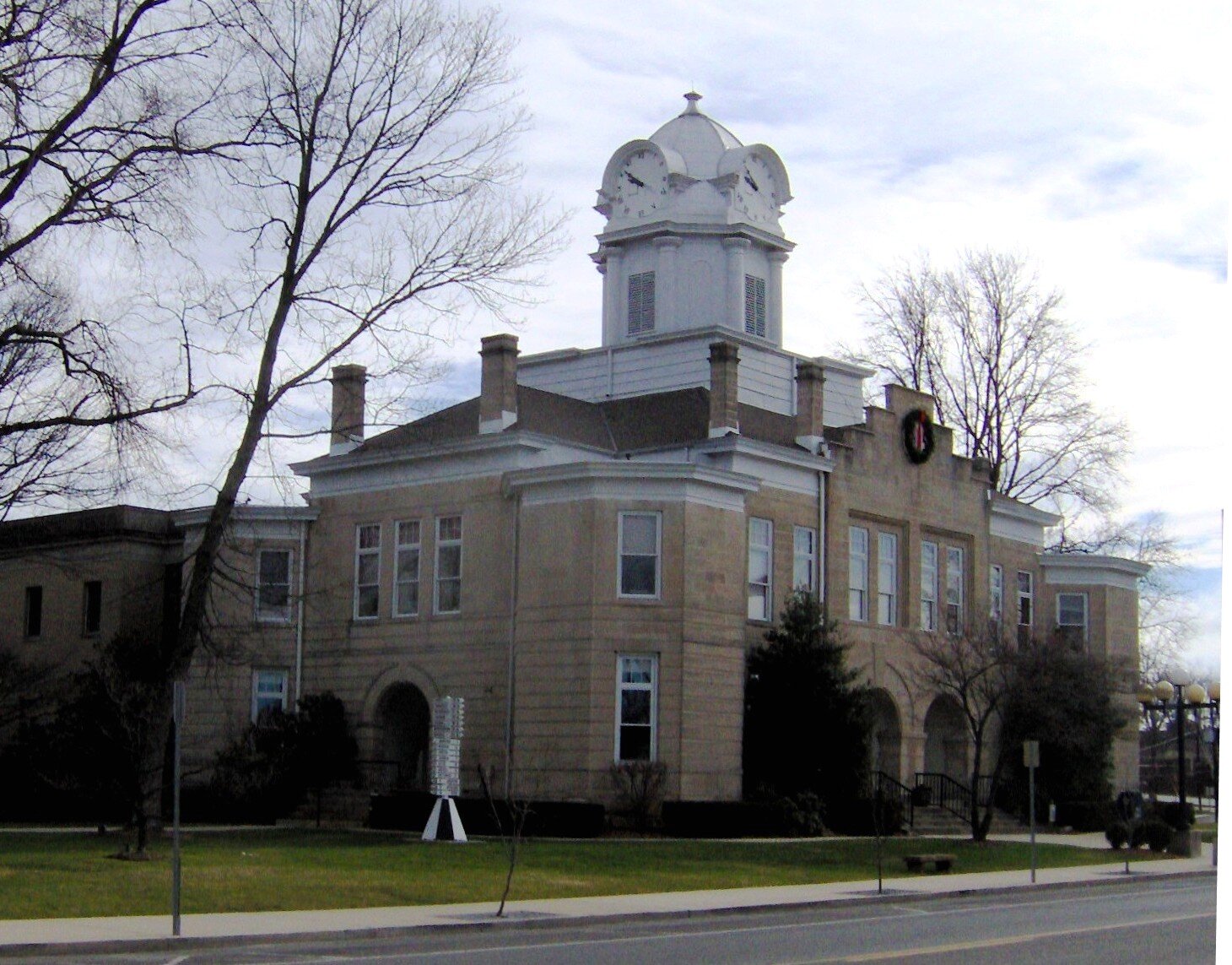
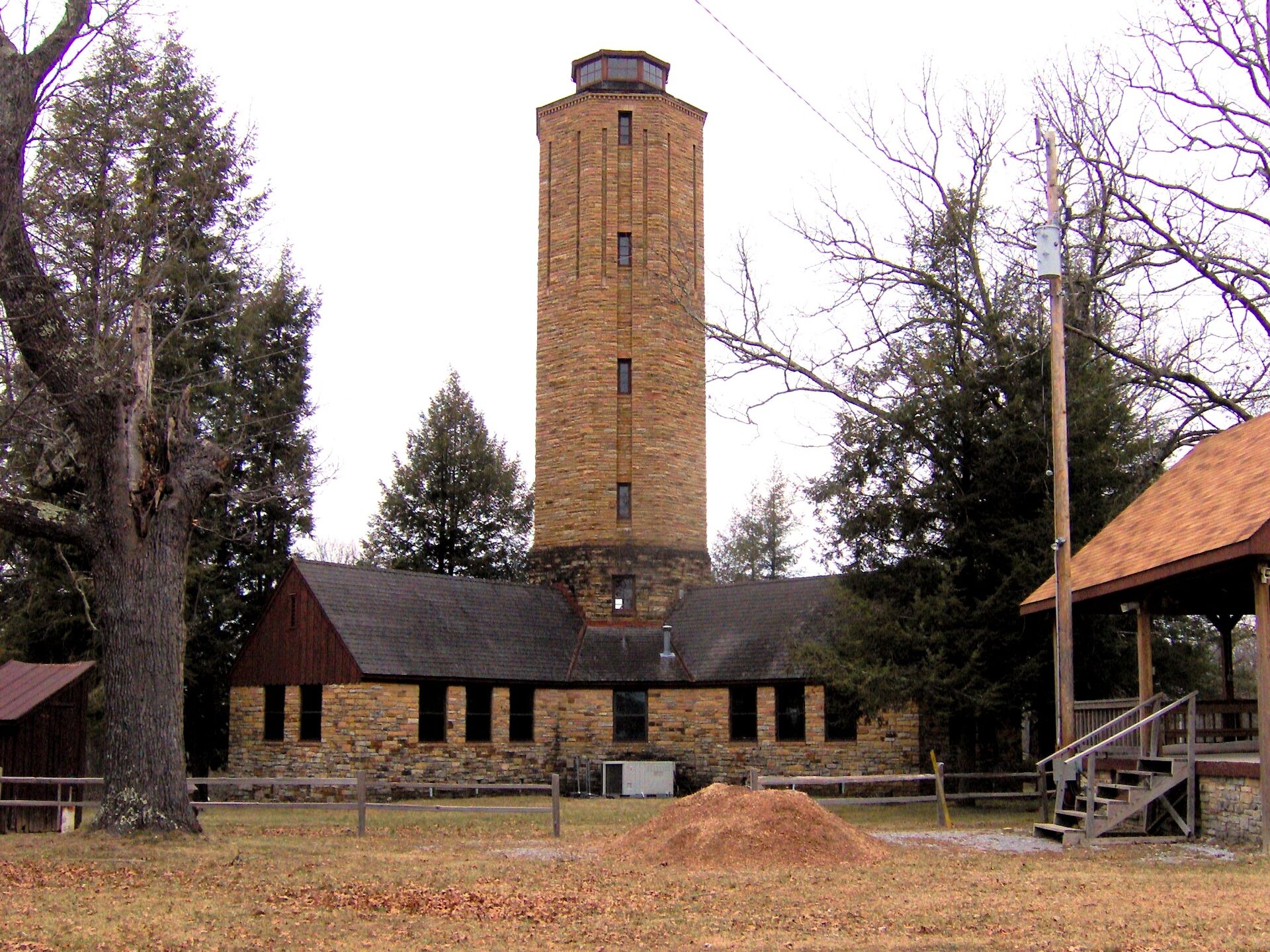
A decorative Flock Safety camera appears in the top-right of the banner, as if watching Crossville landmarks below.
Tennessee · East TN network · statewide
CrossvillePrivacy
East Tennessee and statewide Flock / ALPR reporting on misuse, misreads, city exits, and regional expansion fights. Counts first, then searchable tables, then the writeups.
These counts are Tennessee rows in the same misuse, wrongful-stop, and cancel files used on the National page. Crossville’s local cameras are a separate story on the home page.
5Municipalities that ended Flock (rescind / non-renew)
As of . Tennessee abuse records (2) include Oak Ridge (Flock) and a Shelby County deputy relieved of duty. Cited Oak Ridge reporting says an officer was fired, charged, pleaded guilty, and sentenced. Fired, charged, and convicted can be the same person. A charge or accusation is not a finding of guilt; the plea and sentence are what the outlets reported. The 110+ lookup floor sums published personal-search counts: Oak Ridge 18 and Shelby County 100+. 2 wrongful-stop records: Morristown (Flock plate misread) and an Elizabethton arrest tied to a North Dakota facial-recognition mismatch, not Flock ALPR. No Tennessee wrongful-stop lawsuit or paid settlement is in this dossier. 5 clear exits (White County rescinded, Kingston will not renew, Sullivan County will not renew, Knox County ban Aug. 31, Collegedale terminate Sept. 8). Monterey’s Law Committee Axon-swap recommendation and Hamilton County’s Aug. 31 sheriff pause are two of 7 cancel records; neither is counted as a privacy exit. Counts: 2 + 2 + 7 (misuse, wrongful-stop, cancel). Knox pause, Murfreesboro keep, Loudon proposal, and Johnson City scale are in the watch table, not in those three counts.
Search Tennessee misuse
· wrongful stops
· exits
· National tallies.
Search Tennessee records
Same searchable tables as the National page, limited to Tennessee. Click a city or ID to open that writeup.
Search officer-misuse records
2 catalogued Tennessee incidents from the misuse list. Outcome names the job, not the person: how many officers or civilian employees were fired or resigned, how many were charged or arrested, and how many were convicted or sentenced when reporting gives a number. A charge is not a finding of guilt.
Outcome
Rows
Loading misuse records…
Tennessee officer misuse and ALPR abuse records
Agency
Outcome
Month
Year
Case ID
Sources
Loading misuse records…
Search wrongful-stop records
2 Tennessee records from the wrongful-enforcement list, including ALPR and facial-recognition cases. Search by city, technology, or ID.
Lawsuit
Rows
Loading wrongful-stop records…
Tennessee wrongful-stop and false-alert records
City
Technology
ID
Sources
Loading wrongful-stop records…
Search municipal exits
7 Tennessee records from the cancellations list. Search by city or reason. Ended contracts are quits, non-renewals, rescinds, and cancels before install. Pauses and vendor-swap rows are in the table too; filter Action to Paused or Kind to Pauses and other.
Action
Reason
Kind
Rows
Loading cancellations…
Tennessee municipal Flock cancellations and non-renewals
City
Action
Date
Reasons
Case ID
Sources
Loading cancellations…
Other Tennessee watch items
Pauses, council votes to keep cameras, and proposals that have not gone to a quit-or-renew vote. Knox pause, Murfreesboro keep, Loudon proposal, and Johnson City scale.
Rows
Loading watch items…
Tennessee Flock watch items
Place
Type
What happened
Date
ID
Sources
Loading watch items…
Camera spread
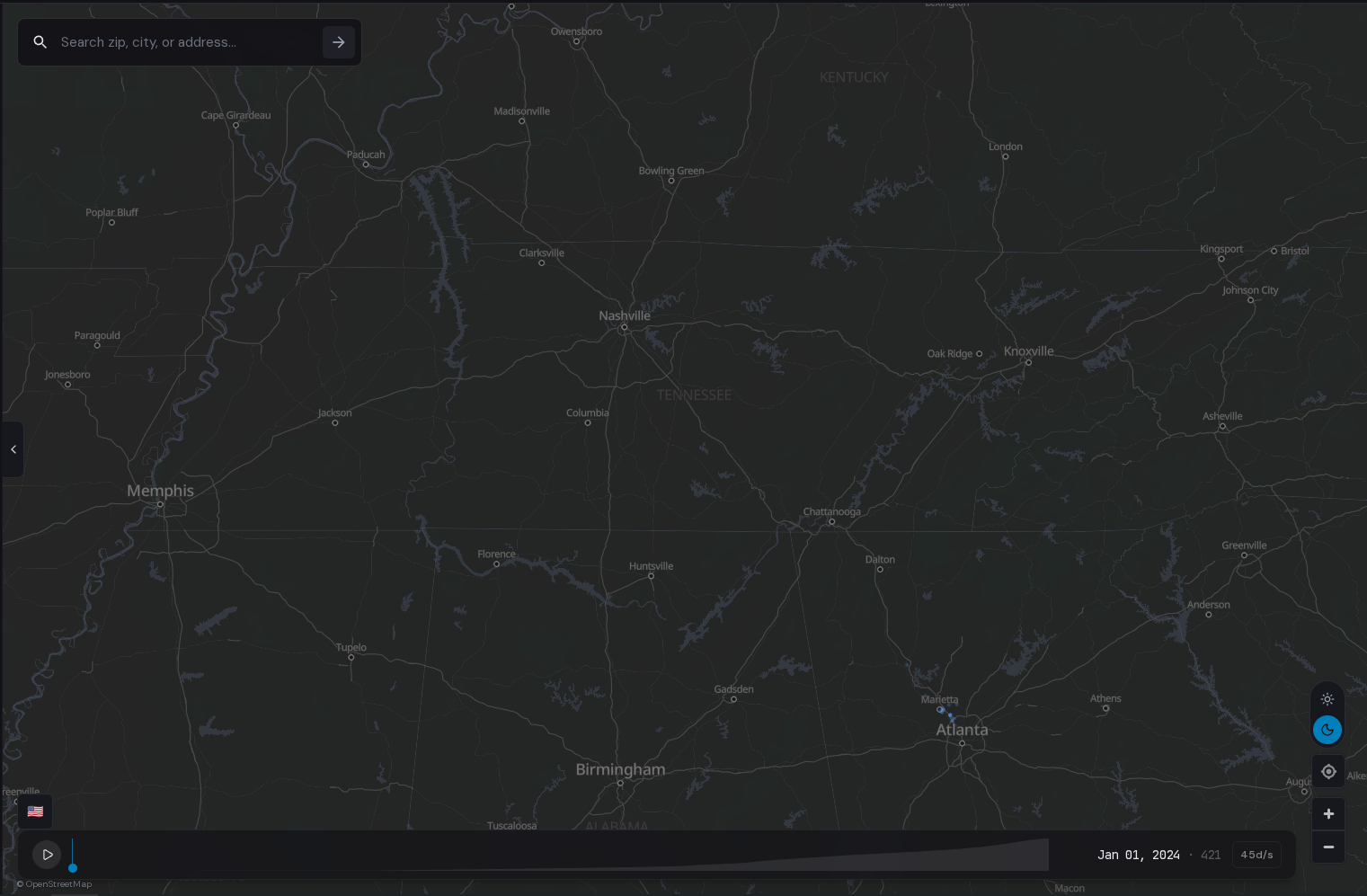
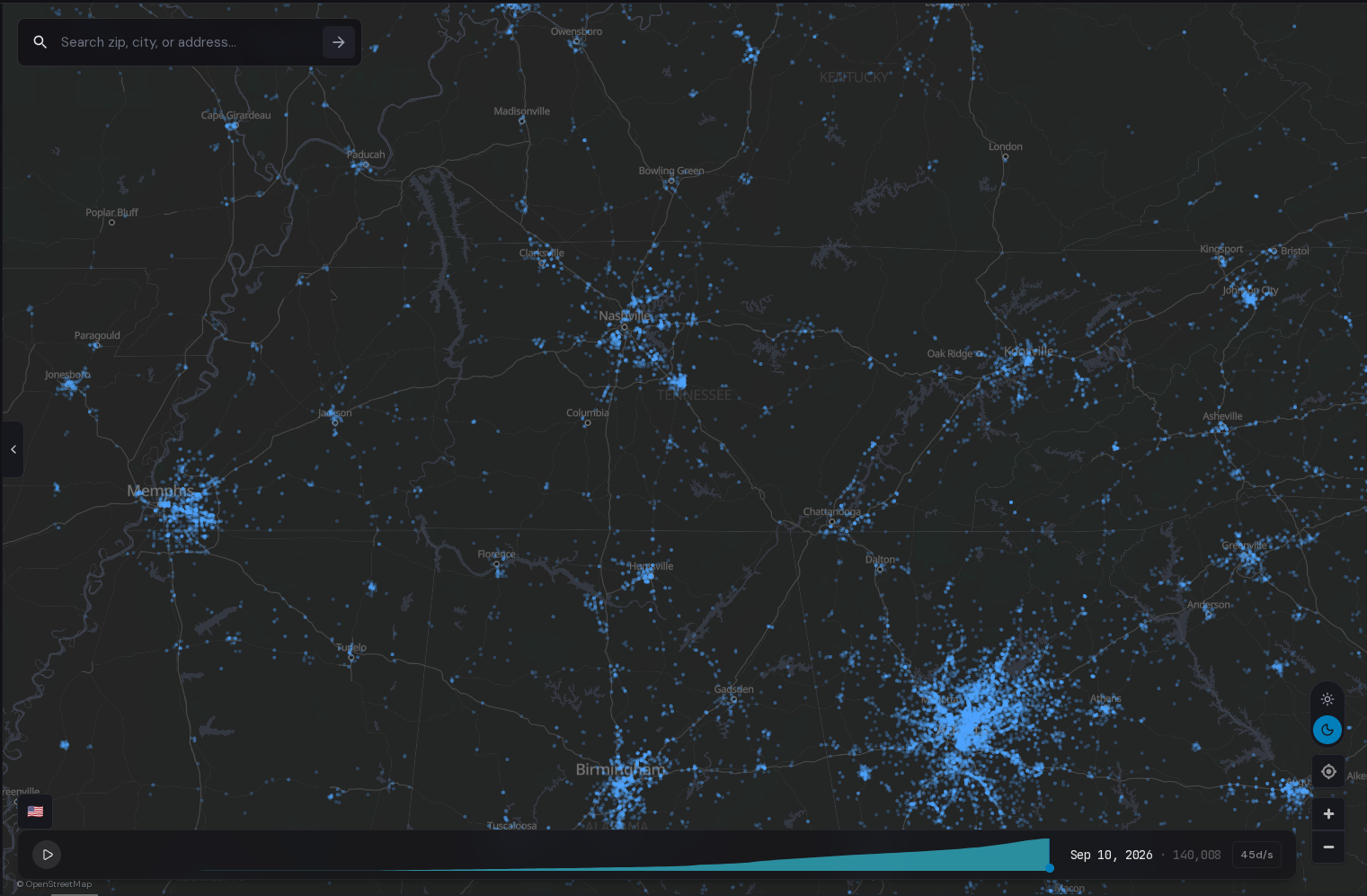
Mapped cameras in Tennessee, 2024 vs today
Same independent DeFlock map, zoomed to Tennessee. Left is Jan. 1, 2024. Right is Sept. 10, 2026. Dots are volunteer logs, not a complete inventory of every camera.
Authoritarians say “if you’ve done nothing wrong, you have nothing to hide.” Tennessee’s own record shows officers do misuse these databases, sometimes against intimate partners. In the documented cases linked below, misuse was often found by victims, internal affairs, or news reporting, not by vendor marketing tools.
Open investigations and charging documents are summarized from linked sources; they are not convictions unless a plea or verdict is stated.
This is not only a Flock problem.Most documented East Tennessee cases involve Flock because that is what agencies bought. The risk is the tool itself: a searchable log of where cars go, with weak rules on who can search. Cities that “quit Flock” and install Axon (or another plate reader) keep the same problem. See Not just Flock: Axon and company swaps.
Oak Ridge, Tennessee · 2025 to 2026 · Flock misuse · sentenced
3B Media reported a former Oak Ridge officer pleaded guilty and was sentenced on 23 counts
3B Media reported that a former officer from Oak Ridge Police was fired, later charged, pleaded guilty March 23, 2026, and was sentenced on 23 counts of official misconduct (Class E felony). WBIR reported the indictment alleged personal use of Flock and other systems between February 25 and March 25, 2025, including 18 Flock searches. The officer is not named here. A charge is not a finding of guilt; the plea and sentence are what the outlets reported.
Per court reporting (including Crossville-area 3B Media): the officer received a Range I two-year sentence on each count, with 48 hours to serve and the remainder suspended to supervised probation, plus judicial diversion eligibility after probation, POST certification surrender, a mental-health assessment, no-contact conditions, and court costs.
Flock’s product supports multi-agency search across East Tennessee agencies documented by MaryvillePrivacy.org. When agencies share plate data, misuse in one city can affect drivers whose plates were scanned in another. Crossville has not published which partners can query local reads, ask before treating network membership as proven for this city.
Shelby County, Tennessee · 2024 · ALPR misuse · relieved of duty
Institute for Justice lists a Shelby County deputy relieved of duty after alleged ALPR tracking
The Institute for Justice lists a Shelby County deputy relieved of duty after alleged ALPR tracking of someone known to the deputy more than 100 times. That listing does not name the camera brand. The deputy is not named here. Relieved of duty is not a conviction.
Tennessee Fusion Center · 2026 · The Intercept · loitering / curfew search category
The Intercept: Tennessee Fusion Center searched Flock under loitering / curfew for a protest note
The Intercept reported September 9, 2026 that Flock search logs showed a Tennessee Bureau of Investigation query under the category “Curfew/Loitering/Vagrancy Violations” across more than 17,000 Flock cameras, with added text about a “suspicious person at planned protest site.” TBI spokesperson Josh DeVine told The Intercept the searches came from the Tennessee Fusion Center (run with the Tennessee Department of Safety and Homeland Security) and referred further questions there. That department had not responded in the cited coverage.
This is not a personal stalking case against a named officer. It is network use of a petty-offense search category that can reach cameras far from the searcher, including cameras in places that never voted for protest monitoring. Crossville has not published whether outside agencies can hit local reads under that category. National writeup: Loitering / curfew searches.
Morristown, Tennessee · June 2025 · Flock misread / gunpoint stop · BI police-records reporting
Morristown family stopped at gunpoint after a Flock plate misread
According to Business Insider reporting on police records, Morristown officers received a Flock alert after a plate was matched to a stolen plate. Guns were drawn and adults were handcuffed until the mismatch was sorted out. BI also describes a Flock investigative summary provided to officers that included a photo of the stopped vehicle.
Local WATE coverage (Yahoo News republish) describes the same gunpoint stop; that account focuses on a stolen-tag / crime-information-database mismatch and does not name the ALPR vendor. Morristown separately approved Flock LPRs in Sept. 2024 local reporting, so the city runs Flock, and BI’s police-records reporting is what names Flock for this specific stop.
Elizabethton, Tennessee / Fargo, North Dakota · July 2025 · facial recognition · not Flock ALPR
Elizabethton arrest after a Fargo facial-recognition mismatch
According to the Grand Forks Herald and The Guardian, Elizabethton police arrested a resident on July 14, 2025 after Fargo detectives used facial recognition on bank camera stills in a North Dakota fraud investigation. That reporting describes a mismatch. This is not a Flock license-plate-reader case.
What Tennessee has, and has not, shown so far:Tennessee has not yet paid a settlement like Aurora’s $1.9M ALPR case or San Francisco’s $495k ALPR case, both are documented ALPR wrongful-stop cases, not Flock-branded products. Tennessee has a reported Oak Ridge Flock case that ended in a guilty plea and sentence, a reported Flock misread gunpoint stop in Morristown (Business Insider police-records reporting), and an Elizabethton arrest tied to a North Dakota facial-recognition mismatch (not Flock). A charge or plea in that coverage is not this site’s finding of guilt. Large ALPR settlements elsewhere show what cities can face when plate-reader programs run without clear rules.
Wider pattern (outside Tennessee)
Other states have documented Flock false alerts, stalking allegations, and high-risk stops, plus dozens of cities that cancelled or let contracts expire. Browse the full catalog on National cases.
Tennessee cases above (Oak Ridge, Morristown, Elizabethton) are what matter most for local council. Crossville still has not published who can query local plate reads.
On-the-record votes, bill sponsorships, and quotes from Tennessee elected officials (and related federal proposals) who restricted plate readers, voted no on expansion, delayed funding, or sponsored warrant and privacy limits. Drawn from council minutes, Metro roll-calls, General Assembly filings, and regional reporting. Cost-only non-renewals and Flock-to-Axon (or other plate-reader) swaps are not in this list. The same Tennessee names are in the nationwide searchable table on the Officials page.
Officials who pushed back on expansion
Restricted ALPRs, voted no on expansion, delayed funding, or sponsored warrant / privacy limits. Not a Flock-to-Axon swap list.
Rep. Tim Burchett U.S. House, Tennessee 2nd District (East TN)
Introduced H.R. 9800, the federal Protection Against Mass Surveillance Act (July 21, 2026), to ban federal agencies from purchasing, deploying, operating, accessing, or contracting for automated license-plate systems including a Flock Safety camera, facial recognition, other biometrics, and persistent mass-surveillance imaging, and to block state/local/Tribal use of federal funds for the same tools. Improperly obtained data would have to be deleted and would be inadmissible. Burchett called the cameras “unconstitutional”: “We gotta ban these dadgum things.” August 1 coverage said Flock argued the bill would effectively ban the cameras and called instead for federal “safeguards.” In an August 3 WATE interview he framed the bill as blocking federal spend while leaving local choice: “All it says is that there will be no federal money spent on Flock cameras. If the locals want to do it, they do it.” Companion pressure: Rep. Massie’s separate funding-withhold tease on the
national page.
The same week, Independent Sen. Bernie Sanders posted “STOP FLOCK” on X. Writeup:
National cases.
H.R. 9800 text (PDF) ·
Resistbot: ask Congress to support H.R. 9800 ·
WVLT (July 25) ·
FOX17 / WZTV ·
NewsChannel9 ·
Star News Network: Flock response (Aug. 1) ·
WATE: Burchett interview (Aug. 3, 2026) ·
Nashville Banner (Aug. 12, 2026) ·
Sen. Bernie Sanders on X (Aug. 18) ·
Fox News: Langley interview (Aug. 22) ·
National writeup
Michaela Barnett Democratic nominee, U.S. House Tennessee 2nd District
The Nashville Banner (Aug. 12, 2026) notes she agrees with Rep. Burchett that LPRs are mass surveillance. Her campaign site: “Keeping our country safe doesn’t mean letting the government spy on us 24/7.”
Nashville Banner (Aug. 12, 2026)
Jack Johnson Tennessee Senate Majority Leader, R-Franklin
Told the Nashville Banner he is “very concerned about the advancement of AI” and distinguished targeted plate searches from “24-hour surveillance of all of our citizens.” “When it’s in question, we have to fall on the side of liberty.” Appeared with Mayor Jacobs and Sen. Blackburn at a Franklin event.
Nashville Banner (Aug. 12, 2026)
Jerri Green Democratic nominee for governor; Memphis City Council
In a Banner candidate questionnaire she wrote that unregulated mass surveillance threatens constitutional privacy and called for “strict, non-negotiable guardrails,” including limits on retention and sharing and a prohibition on sharing local surveillance data with federal immigration authorities.
Nashville Banner (Aug. 12, 2026)
Rep. Thomas Massie U.S. House, Kentucky 4th District
On September 2, 2026, introduced H.R. 10221, the Flock-Off Act, with Rep. Eric Burlison. Original cosponsors: Reps. Lauren Boebert, Paul Gosar, Ro Khanna, Chip Roy, and Victoria Spartz. The bill would cut federal money for ALPRs and biometric cameras and require federally funded systems down in 180 days (toll and border exceptions). Massie told WHAS11 it would not ban locally funded cameras. July 27 he had teased a bill. Full writeup:
National cases: Flock-Off Act.
Massie press release ·
H.R. 10221 PDF ·
Newsweek
Tennessee “PEEPS Act” sponsors Sen. Walley (SB2215); Reps. Hulsey & Hill (HB2608)
Filed the Protecting Everyone from Excessive Police Surveillance (PEEPS) Act (2025-26) to restrict government access to “historical location data” including LPR reads, require annual compliance reporting and redaction, bar looser local ordinances, and suppress evidence obtained in violation, grounded in the Fourth Amendment. The bill stalled in subcommittee (taken off notice March 25, 2026) and did not become law.
TN General Assembly: SB2215 ·
Bill text (PDF)
Clarksville City Council: Jan. 5, 2023 “no” votes (6)
Voted against the LPR support resolution: Redd, Marquis, Smith, Allen, Reynolds, and Butler. Councilperson Karen Reynolds cited “Fourth Amendment concerns,” warned about plate data being “bought and sold,” and flagged the long-term IT/hardening cost to taxpayers.
ClarksvilleNow (roll call)
Terry Frank Anderson County Mayor
Set a Sept. 10, 2026 public hearing at Clinton High on license-plate readers after residents raised privacy concerns. She said the sheriff’s office runs four cameras (three stationary, one mobile), that use is limited, and that she wants a regulatory framework so the tools do not become warrantless mass surveillance. Sheriff Barker said he is willing to join the discussion.
Tennessee writeup ·
WVLT (Aug. 11, 2026) ·
WVLT (Aug. 10, 2026)
Glenn Jacobs Knox County Mayor
Released a July 2026 video statement opposing the Knox County Sheriff’s Office plan to buy almost 300 Flock cameras with $1.5M in grant funding: “I have serious concerns… I believe they are a threat to our privacy and civil liberties.” By July 27 he said ALPRs have “no place” in Knox County. The Commission’s July 27 special workshop was cancelled at the sheriff’s request; on July 28 commissioners continued the debate into August and rejected an immediate ban while demanding policies. July 31 reporting says KCSO did not tell the mayor/commissioners the full multi-year Flock cost picture when it bought year one for $800,000. On August 9 he told Peter Doocy on Fox News’s Sunday Briefing that Flock needs a nationwide pause until constitutional guardrails catch up. After the Aug. 24 workshop, WVLT reported he sent a letter to Flock saying he does not believe the county has a valid contract. After commissioners passed a ban on Aug. 31, WVLT quoted Jacobs saying he had already revoked camera permits and that enforcement will largely fall to the next mayor (ban writeup).
Young Americans for Liberty posted a 90-second clip from his Kibbe on Liberty interview calling Flock cameras anti-American.
Knox County Commission unanimous Aug. 31, 2026 ban
Passed an emergency ordinance banning fixed license plate readers and ordering the Knox County Sheriff’s Office to remove about 143 Flock cameras within 30 days (deadline September 16). Coverage says the ordinance took effect immediately. Commissioner Adam Thompson led the pushback; Commissioner Larsen Jay added language banning surveillance centers. Separate from Knoxville PD’s Axon network and private Flock cameras.
Tennessee writeup ·
National writeup ·
WATE (Aug. 31) ·
WBIR ·
Knox News ·
CAN-2026-145
Derrick Hutchings White County Commission chair, and Denny Wayne Robinson White County Executive
The commission rescinded Flock authorization on July 20, 2026 after stripping camera funding in June. Hutchings said the sheriff’s office started the contract and that cameras may still collect data while they stand. Robinson had already voted no on keeping camera money in the June 2 budget-committee vote, citing privacy and a private company holding government data.
Tennessee writeup ·
National writeup ·
UCNOW (July 20) ·
UCNOW (June 15) ·
UCNOW (June 2) ·
Sparta Live (July 17)
Adam Thompson Knox County Commissioner
Said he was blindsided by the ~300-camera plan, noting the underlying resolution “mentioned nothing about cameras… nothing about surveillance,” and that commissioners heard no specifics from November until June 2026. Introduced the July 28 review resolution seeking privacy, access, audit, and sharing policies before further expansion. Knox News later reported KCSO leaders did not tell budget-approving officials how much the Flock agreement would cost beyond year one.
WVLT (July 24) ·
Knox News (July 28) ·
Knox News (July 31)
Jason Zachary Tennessee House, R-Knox County
In late July 2026 coverage said he has concerns about Flock’s data-access model (“open system”) versus closed systems, and plans state-level conversations before the January session. The Nashville Banner (Aug. 12) says he suggested he will push related legislation after Jacobs came out against the Knox County rollout. Open-versus-closed is a vendor-architecture argument, not an exit from plate readers. Same reporting notes Knoxville PD uses Axon, not Flock.
Action News 5 / WVLT (July 29, 2026) · Nashville Banner (Aug. 12, 2026)
Dave Rosenberg former Nashville Metro Council (Dist. 35)
Sponsored BL2017-646 banning right-of-way plate scanners and requiring Council approval for surveillance tech; called the path “Orwellian”; voted no on 2023 full LPR expansion and said rushing it was “haphazard and careless.”
WPLN ·
Nashville Scene ·
Tennessean / Knox News
Nashville Metro Council: Aug. 15, 2023 “no” votes (14)
Voted against full LPR implementation after the pilot: Bob Mendes, Sharon Hurt, Zulfat Suara, Kyonzte Toombs, Sean Parker, Emily Benedict, Ginny Welsch, Colby Sledge, Freddie O’Connell, Brandon Taylor, Delishia Porterfield, Sandra Sepulveda, Angie Henderson, Dave Rosenberg. (Antoinette Lee abstained.)
Freddie O’Connell Mayor of Nashville; former Metro Councilmember
Voted no on 2023 expansion as a councilmember. As mayor, has kept dedicated LPR funding out of recent budgets and cited privacy and Council consensus, while still saying LPRs can have investigative value.
Nashville Banner ·
WKRN
Sharon Hurt Nashville Metro Council (At-Large)
Came ready to vote yes (personal story of LPR aiding a murder arrest) but voted no, warning that when the people using the tools are biased, even “neutral” technology can harm people.
Tennessean
Sandra Sepulveda Nashville Metro Council, Dist. 30
Opposed expansion over lack of written protections and oversight for how the tools would be used.
Tennessean
Colby Sledge former Nashville Metro Council
Co-sponsor on the 2017 surveillance-oversight ordinance; voted no on 2023 LPR expansion.
BL2017-646 ·
Tennessean
Amelia Parker & Seema Singh Knoxville City Council
Voted against Knoxville’s Axon / RTIC surveillance package; Parker argued policy must precede contracts and that monitoring already erodes Black residents’ liberties.
Compass Knox
Sen. Page Walley Tennessee Senate
Sponsored the PEEPS Act (SB 2215) requiring warrants / logging for historical location databases that include LPR data.
TNGA
Rep. Bud Hulsey & Rep. Timothy Hill Tennessee House
House sponsors of PEEPS companion HB 2608.
Rollin Horton Nashville Metro Council
Publicly opposed a state bill that would have preempted Metro’s local LPR / surveillance rules and let police skip Council procurement votes.
Tennessee Lookout
Still incomplete for every Tennessee town. Check primary minutes before contacting officials. If a name is missing, email info@crossvilleprivacy.org with a source. Nationwide search: Officials page. Full link dump also lives under All cited sources.
State law
State-level ALPR action: a comparison
What other states have done, and what Tennessee hasn’t. Federal court rules set a minimum. States can pass stronger privacy laws on plate-reader surveillance. Maine and Virginia have done so. Tennessee has not. The table below summarizes the contrast.
90-day max under TCA § 55-10-302 (investigation exceptions); Flock default often 30 days, not a Maine/Virginia-style package
Written agency policies required
Yes
Yes
No
Audit trail and internal audits required
Yes
Yes
No
Mandatory public reporting
Yes
Yes
No
Vendor practice restrictions
Yes
Yes
No
Restrictions on out-of-state data sharing
Yes
Yes
No
Penalty for violation
Class E crime
Statutory civil and administrative remedies
None
What this means for Tennessee residents: the stronger Maine and Virginia protections, shorter ordinary retention (21 days), mandatory policies/audits/public reporting, vendor restrictions, and real penalties, are things the Tennessee General Assembly could still enact. If lawmakers refuse those upgrades, Tennessee keeps weaker protections than Maine or Virginia. That is the legislation Cumberland County’s representatives will vote on, oppose, or sponsor.
Tennessee’s retention row above reflects TCA § 55-10-302 (generally no more than 90 days unless retained for an ongoing investigation). That caps how long data may be stored; it is not Maine/Virginia’s protective package: it does not create a broad use prohibition, mandatory written policies, audit trails, public reporting, vendor restrictions, out-of-state sharing limits, or a penalty scheme like the other rows. See also the PEEPS Act effort under Tennessee politician positions.
East Tennessee ALPR network: Crossville’s place in it
Crossville’s cameras do not operate in a vacuum. Flock’s product is built for multi-agency search: plate reads from one city can become searchable far beyond Cumberland County where sharing is enabled. Oak Ridge has a reported Flock case that ended in a guilty plea and sentence; Crossville has not published which partners can query local reads. Next door, White County rescinded Flock authorization. On I-40 east, Monterey’s Law Committee recommended swapping most Flock cameras for Axon while keeping one Flock for the national share. Sullivan County’s commission voted 18–0 not to renew after the sheriff suspended that office’s 10 cameras. Loudon County’s sheriff held a public meeting on a proposed countywide Flock rollout; WVLT reported the room opposed it and no decision was made. Johnson City’s 2025 Safe City deal shows how fast a regional camera network can grow. Middle Tennessee is in the same fight: FOX 17’s July 2026 debate piece
covers Lebanon residents asking council to cancel and Cheatham County expanding past 20 cameras.
Action News 5 reported August 21, 2026 that Memphis Police say there are about 200 Flock cameras citywide. DeFlock mapping cited in the piece counts seven at Overton Square and 11 at Poplar Plaza. Residents interviewed near Overton Square said they did not realize the cameras were there and called the network an invasion of privacy. Deputy Chief Andrew Brown said searches are audited, require mandatory fields, and that misuse of technology can get an officer fired. Cameras stay.
For East Tennessee camera geography, WVLT published an interactive map of surveillance tools including Flock (covering agencies such as KPD, KCSO, and Clinton). Related East Tennessee writeups: Anderson County hearing · Knox County workshop.
WVLT reported August 11, 2026 that Anderson County Mayor Terry Frank called a public hearing for Sept. 10 at Clinton High on license-plate readers. She asked the sheriff’s office to explain how the cameras work and whether residents need to be told about surveillance done with them. An earlier WVLT piece said the sheriff’s office runs four cameras: three stationary and one mobile. Frank said use is limited and that she wants experts to help build a regulatory framework. Her concern is keeping the tools from becoming warrantless mass surveillance. Sheriff Barker said he is willing to sit in the meeting.
Oak Ridge’s documented Oak Ridge Flock misuse case sits in Anderson County. Nearby, Hoodline reported (citing the Courier News) that Rocky Top plans to end its Flock contract in October, citing about $3,500 per camera and weak results. Hoodline also attributed city counts of about eight cameras in Clinton and about 17 in Oak Ridge. The same East Tennessee fight is underway in Knox County.
WVLT reported August 19, 2026 that Loudon County Sheriff Jimmy Davis held a public meeting Monday night on a proposed countywide Flock license-plate-reader rollout. A moderator asked who wanted the cameras; WVLT said no one responded. When asked who did not want them, the entire room raised their hands. No decision was made. Davis said he wants more input from residents first.
Davis called the cameras an important law-enforcement tool and said his office is looking at guardrails. WVLT quoted him saying he can cite crimes solved, “but it really doesn’t matter if it violates the rights.” Assistant Chief Deputy Chris Hutchens said, “I think the worst statement in the world is if you have nothing to hide you shouldn’t be worried about it.” The piece notes similar Flock debates in Knoxville, Knox County, and Clinton. This is a proposed rollout. Coverage does not report a signed contract, a camera count, a cancel, or a pause.
The Herald-Citizen reported that Monterey’s Law Committee voted Monday night, August 17, 2026, to recommend replacing most of the town’s Flock cameras with Axon readers. Putnam County sits on I-40 east of Cumberland County. Lt. Andrew Neff said Flock’s cost is going up and that Flock data “can be shared everywhere pretty much,” while Axon stores data in-house. Search rules, he said, are similar: officers still have to enter a reason and a case or CAD number.
The department wants to keep one Flock camera so Monterey stays on the nationwide share. The Board of Mayor and Aldermen has not finally approved the change. A related Herald-Citizen Cookeville piece notes the same Monterey proposal. This is not a privacy win. Replacing Flock with Axon keeps warrantless scanning under a new logo, and they still want one Flock camera on the national share. That is the vendor-swap risk on this site’s Not just Flock section.
The Mountain Press / Roane County News reported August 19, 2026 that Kingston will not renew its Flock Safety contract. City Manager David Bolling said the two cameras were a trial and that the benefit did not justify the cost for a small department. Mayor Tim Neal said the decision is financial: about $6,000 a year. The 2024 deal was $12,300 for two years and expires in September.
Cameras stay up until that expiration. Neal said the choice is not about the national privacy fight.
UCNOW reported that the White County Commission voted July 20, 2026 to rescind the April 2025 resolution that authorized Flock cameras. Chair Derrick Hutchings said the board reversed after resident privacy pushback. He said the sheriff’s office asked for the cameras, that units went up around September or October 2025, and that they likely still collect data while they stand. Removal, he said, sits with the sheriff’s office because that agency started the contract. County Attorney Sam Benningfield said the county should not touch vendor equipment if it is not county property, and that the state had given permission for the right-of-way.
In June the commission had already stripped about $48,000 meant for Flock while leaving the dollars in the sheriff’s budget, UCNOW reported. That coverage counted 12 county cameras; Sparta’s cameras are a separate city program. On June 2 the budget committee had kept camera funding 3–1, with County Executive Denny Wayne Robinson the no vote, per a third UCNOW report.
After the June funding strip, Sparta Live quoted Sheriff Steve Page saying he told Flock the county cameras were unfunded and could come down; pickup still waits on the vendor. That is not a confirmed hardware pull. Sparta city cameras stay. On August 7, Upper Cumberland News Leader quoted Page saying he ordered Flock removal after community feedback; confirmation that the hardware is down is still pending.
Maryville Police Chief Tony Jay Crisp lost the August 6, 2026 Republican primary for Tennessee House District 8 in a landslide. Teacher Jordan Henderson beat him 5,873–3,540 (~62%–38%), per the Daily Times. Henderson advances to November against Democrat Hilary Trudell.
Money did not save him. Campaign-finance reporting cited by Tennessee Firefly put Crisp at about $82,280 in contributions versus Henderson’s about $12,600, roughly a 6.5-to-1 cash advantage for the chief. He still lost by about 25 points.
MaryvillePrivacy.org published Tennessee Public Records Act materials on Crisp’s stewardship of Maryville’s Flock program and his ongoing relationship with Flock sales contact Alex Guth. Their dossier documents vendor emails and hospitality, multi-jurisdiction drone pricing pitched across Maryville PD, Alcoa PD, Blount County Sheriff’s Office, and Blount 911, and a February–March 2025 thread in which Guth asked Crisp to introduce him to the Maryville Housing Authority so a HUD grant could fund Flock products. Crisp agreed to make the introduction. MaryvillePrivacy’s writeup calls that pattern using the chief as a sales facilitator for additional Flock sales. Crossville should refuse that playbook.
The Nashville Banner reported August 12 that opposition to license-plate readers is spreading among Tennessee politicians even as Flock still has four lobbyists registered at the statehouse. The piece quotes Mayor Glenn Jacobs telling the Banner the cameras are not “old school license plate readers,” that Tennessee’s LPR statutes date to 2014 with a minor 2021 update, and that “technology has gotten way far ahead.” Senate Majority Leader Jack Johnson (R-Franklin) said he is “very concerned about the advancement of AI” and that when security and liberty are in tension, “we have to fall on the side of liberty.” Democratic gubernatorial nominee Jerri Green wrote that unregulated mass surveillance threatens constitutional privacy and called for non-negotiable guardrails, including a ban on sharing local data with federal immigration authorities. Republican nominee Marsha Blackburn answered a Banner questionnaire “Yes, I do” support LPRs and Flock cameras, then struck a more careful tone standing with Jacobs and Johnson, drawing a line between reading a plate and “24-hour surveillance.” The Times Free Press reprinted that Banner report on August 14 under a Creative Commons license.
In the 2nd Congressional District, Democrat Michaela Barnett agrees with Rep. Tim Burchett that the cameras are mass surveillance. TDOT told the Banner no license agreements have been issued to the Tennessee Highway Patrol for LPRs on state right-of-way. Nashville’s citywide LPR plan remains stalled.
Knox News reported August 19, 2026 that Spry Strategies, a local Republican polling firm, surveyed 350 likely Knox County voters and found 58% oppose police use of Flock cameras. Opposition crossed party lines: 49% of Republicans, 75% of Democrats, and 58% of independents. The sample was 58% Republican and 27% Democratic, which Knox News said matches recent primary ballots. Fifty-five percent said they would be less likely to vote for a candidate who supports Flock. The poll’s executive summary said the clearest consensus was for guardrails and transparency, not necessarily ripping every camera down. The Aug. 24 workshop is done; commissioners are set to vote on a ban Aug. 31.
WSMV reported August 14, 2026 that Murfreesboro residents asked City Council the night before to back out of a June renewal of more than $240,000 for Flock license-plate readers and gunshot microphones. Council declined. DeFlock volunteers have mapped 154 ALPR cameras in and around the city, WSMV reported. Councilmember Austin Maxwell said he supports the technology and that the city can tighten guardrails. Police declined new comment and pointed back to earlier council remarks. Cameras stay.
On July 28, 2026, FOX 17 / WZTV reported the statewide tension: Lebanon residents (including Mikal Qualls and Rick Julian) have urged City Council to dissolve the Flock contract over searchable travel histories and Fourth Amendment concerns, while Cheatham County Sheriff’s Office Capt. Chris Gilmore defended more than 20 county cameras with investigative examples and said data is retained for deputies for 30 days, without facial recognition or seeing who is driving. The piece also notes Rep. Tim Burchett’s federal Protection Against Mass Surveillance Act and the DeFlock mapping project.
The same Flock system Crossville uses. The same arguments at council. Crossville should cancel and remove cameras, not wait for Middle Tennessee to settle the debate first.
Knox News reports it obtained a Knox County Sheriff’s Office purchase order for year one of a Flock Safety deal at $800,000 for a “Flock Safety Bundle and Flock Safety Professional Services.” KCSO later asked procurement to revise the order from a one-year buy to year one of ten. Procurement Director Mandi Benedict told Knox News her office has not been part of discussions about costs or details for years two through ten. The PO request did not include a service contract, only a Flock order form; KCSO used a cooperative / piggyback purchase (Houston-area Region 4 ESC / OMNIA-style contract path) so the equipment buy did not go through a mayor/commission service-contract vote. Cameras were purchased around April 20; Knox News says mayor and commissioners were not told about the planned surveillance hub until July 6. Some cameras were already installed in East Knox County. Future service contracts over $100,000 still need commission/mayor buy-in, so the pause fight continues into the next sheriff’s term. Ask for the full multi-year cost, the written service terms, and a recorded public vote before any renewal, not just a first-year invoice. August 4 reporting on where those cameras actually went:
placement outside the grant’s high-crime zip codes.
Knox News reported that KCSO’s state-grant plan named six Knoxville-area zip codes with the highest crime rates (37918, 37917, 37914, 37915, 37920, 37921) and said the agency wanted to avoid overlapping Knoxville PD’s camera network. A month before the Advanced Research Center hub was set to launch, cameras were also going up in rural districts such as Corryton and Mascot, far outside those zip codes. Procurement director Hugh Holt told Knox News the office is putting cameras in the targeted zones and throughout the county, and that “We do not own the hardware; we own the data that it produces.” Commissioner Adam Thompson, who represents Corryton and Mascot, has led the pushback after spotting cameras in his district. County engineering stopped new right-of-way installs pending mayor/commission direction. New cameras remained offline through Spangler’s term (Sept. 1). Commission voted to ban the system on Aug. 31: ban writeup. The Aug. 24 workshop preceded the vote.
KCSO still had not published a data policy or full public location list as of that August 4 reporting.
NewsChannel9 reported that Collegedale’s city commission voted unanimously September 8, 2026, to end the city’s Flock contract. Police Chief Jack Sapp said he had already cut officer access on September 3 and revoked outside-agency access to the six city cameras. The station said Flock told the city pickup could take 30 to 60 days and $500 per camera. Vice Mayor Tonya Sadler asked for a removal deadline if Flock does not meet it. The cameras are off. Hardware is still mounted pending pickup.
This is Collegedale’s own contract. It is not the Hamilton County sheriff pause (writeup). National writeup: Collegedale terminate.
On August 31, 2026, Hamilton County Sheriff Austin Garrett directed staff to begin pausing the sheriff’s office Flock License Plate Recognition and Motorola LPR programs. NewsChannel9 reported Garrett said the decision followed weeks of deliberation and that the primary factor was concern about public data and potential misuse of what is captured. The sheriff’s office oversees about 70 cameras across Hamilton County. Garrett said he still believes in LPR technology but ordered command staff to work through the concerns before resuming. He called on state and federal leaders to start a broader conversation about safeguards for Tennessee.
Chattanooga city police and private Flock cameras are separate from the county sheriff’s programs. Collegedale later voted unanimously to end its own Flock contract (writeup). This is a pause, not a final cancel.
On Monday night, August 31, 2026, Knox County Commission unanimously passed an emergency ordinance banning fixed license plate readers and ordering the Knox County Sheriff’s Office to remove about 143 Flock cameras within 30 days. WATE, WBIR, and Knox News reported the deadline as September 16 and said county staff will remove the hardware if KCSO does not. WVLT said the ordinance took effect immediately because emergency measures need only one reading.
The vote caps weeks of East Tennessee backlash over a grant-funded plan for roughly 270 additional cameras on top of the sheriff’s existing network. Commissioner Adam Thompson, who led the pushback, told Knox News the cameras violate civil liberties. Commissioner Larsen Jay added language banning surveillance centers, not just the cameras feeding them. Coverage describes Flock sales staff defending the system to jeers from the gallery while KCSO officials could not answer basic contract and policy questions at the Aug. 24 workshop.
Commissioners also rebuked how the sheriff’s office bought the system. WVLT and Knox News say KCSO spent years buying Flock units in batches priced just $10 under the $25,000 threshold that triggers mayoral review, and that an $800,000 Omnia purchase surfaced at the Aug. 25 meeting while the office was still framing the deal as year one of ten. Mayor Glenn Jacobs told WVLT he had already revoked permits, that some pole mounts lacked county permits or met federal safety standards, and that maintaining the network could require about $2.6 million. Jacobs and Law Director David Buuck have said they do not believe the county has a valid Flock agreement.
The ordinance bans Knox County from buying, leasing, or installing automated license plate reader systems on county property, rights-of-way, buildings, traffic infrastructure, and utility poles. Knox News says vehicle-mounted readers may remain when a deputy is present. KCSO had not publicly responded as of cited reporting; no sheriff’s representative was at the Monday vote, per WOKI / WVLT radio coverage. Mayor-elect Betsy Henderson praised the vote; outgoing Jacobs said implementation will largely fall to the next administration. Sheriff-elect Brent Gibson could try to rebuild a program from scratch under a different process if he chooses.
On September 10, 2026, Knox News reported that Mayor Betsy Henderson said Flock told the county it cannot remove the cameras until Oct. 7, past the Sept. 16 ordinance deadline. Henderson said county crews designed “personal privacy shields” to cover the mounted units so Flock cannot collect plate data until takedown. The ban stands; the hardware is still up under covers for now.
Knox News and WVLT reported that Knox County Commission met for more than two hours on Monday, August 24, 2026 with Flock Safety and Knox County Sheriff’s Office representatives. No vote was taken. Coverage describes little support for Flock in the room. Capt. Tony Chamberlain told commissioners KCSO now has 143 Flock cameras. New installs remain paused; existing cameras stay up for now.
Commissioner Larsen Jay said he reviewed records showing multiple payments to Flock of $24,990, just $10 under the $25,000 threshold that triggers mayoral review, and paired $12,500 buys that together would have crossed it. WIVK quoted Jay calling that pattern a red flag. Jay said he plans an amendment on an emergency ordinance for August 31 that would require cameras removed within 30 days unless Sheriff-elect Brent Gibson rebuilds a program from scratch. An emergency ordinance needs only one reading if at least eight commissioners vote yes.
Mayor Glenn Jacobs and Law Director David Buuck told commissioners the sheriff’s office is operating without a valid agreement. WVLT reported Jacobs sent a letter to Flock saying he does not believe the county has a valid contract. Knox News cites an August 12 letter putting total spend at about $274,720 on a deal that began as a small 2020 service agreement and grew past the thresholds for mayor and commission approval. Commissioner Kim Frazier said at the meeting the cameras should be deactivated immediately because there is no active agreement. KCSO procurement director Hugh Holt and Chamberlain could not answer basic questions about contracts, placement, and policy, Knox News reported.
After Mayor Glenn Jacobs and commissioners challenged a grant-funded plan for roughly 270-300 additional Flock cameras / ARC capacity, Sheriff Tom Spangler said remaining installs were paused while existing LPRs (reporting then cited about 84; August 24 coverage says 143) stay online with ~30-day retention. Jacobs and Spangler agreed new cameras would stay offline through the end of their terms (Sept. 1). On July 28, Knox County Commission continued the debate into August, demanded written policies on privacy, access, audits, and sharing, and rejected an emergency ban. The Aug. 24 workshop followed; on Aug. 31 commissioners passed a ban instead (ban writeup). Separate July 31 reporting documents an $800,000 year-one purchase order later framed as year one of ten: read that update. State Rep. Jason Zachary and Rep. Tim Burchett are pushing state/federal limits; same coverage notes Knoxville PD runs Axon, not Flock.
On August 9, 2026, Jacobs told Peter Doocy on
Fox News’s Sunday Briefing
that Flock needs a “nationwide pause” until constitutional guardrails catch up. A
Fox News writeup
of the interview notes he argued Tennessee’s ALPR statutes (2014, with a minor 2021 update) are outdated for newer Flock-style systems, pointed to documented misuse cases, and said tools must still conform to the Constitution. A
Young Americans for Liberty clip
from his
Kibbe on Liberty
interview is on his
Jacobs writeup.
WJHL (via Yahoo) reported that the Sullivan County Commission voted 18–0 on August 20, 2026 not to renew the county’s Flock contract. The resolution was amended to say Flock cameras would not be used within the county. It does not apply to Kingsport or Bristol police cameras. The contract ends in January 2027.
Three days earlier, WVLT reported that Sheriff Jeffrey Cassidy suspended the sheriff’s office’s use of Flock until further notice. Cassidy cited privacy, oversight, and government-surveillance concerns. WVLT says the office runs 10 Flock cameras, all on state highways. He asked the commission to consider a referendum; elections administrator Jason Booher told WJHL the commission cannot put that on the ballot. Nearby and private Flock can continue.
Sheriff use is already off. County cameras stay in the contract until January 2027. White County, Kingston, and Monterey are covered separately.
Quote Q-00234: 10 Falcons. 2025 invoice lists $30,000/year ($3,000 each); city paid $25,000 after a $5,000 credit
Little public info (local check July 21, 2026): no city-published search policy or official camera map found; Flock transparency portal URL unavailable
Anderson County SO
4 Flock cameras (3 stationary + 1 mobile), per Mayor Frank / WVLT
Public hearing Sept. 10, 2026 at Clinton High. Mayor Frank wants a regulatory framework and raised warrantless mass-surveillance concerns. Sheriff use described as limited. writeup
Oak Ridge PD
Peer East TN Flock agency (MaryvillePrivacy)
Cited reporting: 18 Flock searches alleged in the indictment; plea and sentence on 23 counts. A charge is not a finding of guilt.
Knox County SO
Grant plan for ~270-300 Flock cameras / ARC (~$1.5-1.6M); August 24 coverage cites 143 existing cameras still operating
Ban passed Aug. 31: Commission unanimously ordered the sheriff’s office to remove about 143 Flock cameras by Sept. 16. Emergency ordinance also bans future county fixed ALPRs and surveillance centers. ban writeup · CAN-2026-145 · workshop
Hamilton County SO
~70 Flock and Motorola LPR cameras across Hamilton County (NewsChannel9, Aug. 31, 2026)
Pause Aug. 31: Sheriff Garrett directed staff to begin pausing Flock and Motorola LPR over data and misuse concerns. Chattanooga city cameras are separate. Collegedale later terminated its own contract. writeup · CAN-2026-147
Terminated Sept. 8: Commission voted unanimously to end the Flock contract. Chief Sapp cut officer access September 3. Hardware still mounted pending pickup. writeup · CAN-2026-207
Loudon County SO
Proposed countywide Flock rollout; camera count not in the coverage
No decision: public meeting Monday night before Aug. 19 reporting; WVLT said the room opposed the cameras. Sheriff Davis asked for more resident input. writeup
White County SO / Commission
12 county Flock cameras (UCNOW); Sparta city cameras separate
Authorization rescinded July 20, 2026: Commission reversed the April 2025 resolution after a June funding strip. Sheriff Page told Flock the county units could come down; Upper Cumberland News Leader (Aug. 7) quoted him saying he ordered removal after community feedback. Hardware-down confirmation still pending. Sparta city cameras stay. writeup · CAN-2026-113
Kingston PD
2 Flock cameras; 2024 trial about $12,300 / two years
Will not renew: expires September 2026. Mayor and city manager cited cost, not privacy. writeup · CAN-2026-114
Monterey PD
Town Flock cameras in place; count not in the Herald-Citizen coverage. Proposal: keep one Flock, replace the rest with Axon
Law Committee recommended Axon swap Aug. 17, 2026: Board of Mayor and Aldermen has not finally approved. Vendor swap, not a privacy exit. writeup · CAN-2026-115
Sullivan County SO
10 Flock cameras on state highways (WVLT, Aug. 17, 2026)
Commission 18–0 not to renew Aug. 20: sheriff already suspended use. Contract ends January 2027. Kingsport and Bristol PD excluded. writeup · CAN-2026-100
Procurement trail: Quote Q-00234 (10 Falcons, $25k/yr in 2022) · 2025 invoice lists $30,000 · Dec. 13, 2022 minutes (Brooks recommends the purchase on consent) · cost table
Open question: which partners can query Crossville reads today?
Neighbor: White County (next county south) rescinded Flock authorization July 20, 2026; 12 cameras may still be standing. writeup
Neighbor: Monterey (Putnam County, I-40 east) Law Committee recommended swapping most Flock cameras for Axon and keeping one Flock for national sharing. Vendor swap, not a privacy exit. Board has not finally approved. writeup
Contrast: Johnson City’s Safe City plan lists 145 LPRs versus Crossville’s 10-Falcon quote
Regional transparency hub (MaryvillePrivacy)
Maryville Residents for Privacy maintains a multi-city East Tennessee ALPR accountability page, maps, TPRA outcomes, and who approved programs in peer jurisdictions.
 Crossville